


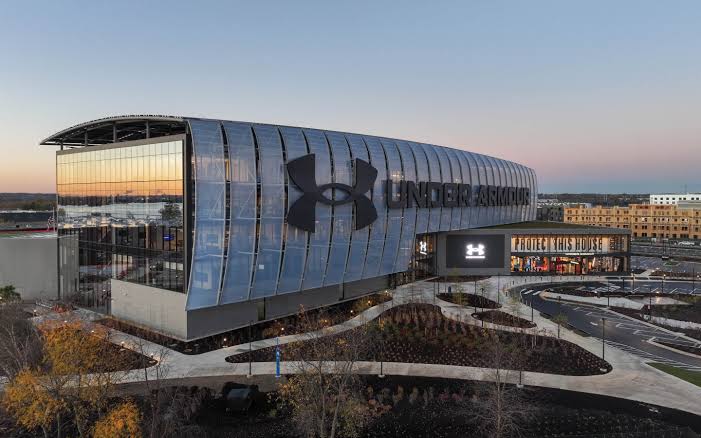
Under Armour competitors are the sportswear brands that compete with Under Armour for athletes, gym-goers, and team sponsorships. Under Armour’s biggest competitor is Nike, followed by Adidas, Lululemon, New Balance, and Puma, while fast-growing brands like Gymshark, On, and HOKA are taking share in training and running gear.
Under Armour built its name on sweat-wicking compression shirts in the late 1990s. Today it is a $5 billion brand, but its sales are shrinking while many rivals grow. This Under Armour competitors analysis ranks 12 rivals by revenue, explains its indirect competition, and looks at why the brand is struggling in 2026.
Key Takeaways
- Nike is Under Armour’s biggest competitor, with revenue about nine times larger ($46.4 billion vs $5.0 billion).
- Under Armour’s revenue fell 4% in fiscal 2026, with North America down 8%, while international sales grew 4%.
- Under Armour lost two major partners in the past year: Stephen Curry’s brand and Dwayne Johnson’s Project Rock.
- Gymshark, On, HOKA, and Vuori are winning younger gym-goers and runners who once chose Under Armour.
- Under Armour’s indirect competitors include Decathlon, store brands at Target and Amazon, and fan gear sellers like Fanatics.
Under Armour at a Glance
| Under Armour Fact | Details |
|---|---|
| Founded | 1996, by Kevin Plank |
| Headquarters | Baltimore, Maryland |
| CEO | Kevin Plank (returned in April 2024) |
| Revenue | $4.97 billion (fiscal 2026, ended March 31, 2026) |
| Revenue change | Down 3.8% |
| Biggest region | North America, about 58% of sales |
| Product mix | Apparel 68%, footwear 22%, accessories 8% |
| Employees | About 14,100 |
| Known for | HeatGear, ColdGear, UA HOVR shoes, compression wear |
These figures come from Under Armour’s fiscal 2026 results. In its annual report, Under Armour names Nike, Adidas, Puma, and Lululemon as its main competitors. For a deeper look at the brand, read our Under Armour SWOT analysis.
Who Is Under Armour’s Biggest Competitor?
Who is Under Armour’s biggest competitor? Nike is Under Armour’s biggest competitor. Both are American brands that fight for the same athletes, college teams, and gym shoppers. But Nike is far larger, with $46.4 billion in revenue compared with Under Armour’s $5.0 billion.
Here are Under Armour’s 12 biggest competitors, ranked by their latest annual revenue:
| # | Competitor | Country | Latest Revenue | Where It Competes With UA |
|---|---|---|---|---|
| 1 | Nike | US | $46.4B (FY2026) | Everything, especially US sports |
| 2 | Adidas | Germany | €24.8B (2025) | Soccer, training, college teams |
| 3 | Lululemon | Canada | $11.1B (FY2025) | Premium training apparel |
| 4 | New Balance | US | $9.2B (2025) | Running and training shoes |
| 5 | Skechers | US | $9.0B (2024) | Affordable athletic shoes |
| 6 | Puma | Germany | €7.3B (2025) | Training, soccer, lifestyle |
| 7 | ASICS | Japan | ¥810.9B (2025) | Running shoes |
| 8 | Columbia Sportswear | US | $3.4B (2025) | Outdoor and cold-weather gear |
| 9 | On | Switzerland | CHF 3.0B (2025) | Premium running |
| 10 | HOKA | US (Deckers) | $2.6B (FY2026) | Cushioned running shoes |
| 11 | Gymshark | UK | £646M (FY2025) | Gym wear for young lifters |
| 12 | Brooks Running | US | Not disclosed (+16% in 2025) | Running shoes |
Revenues are shown in each company’s own currency and fiscal year, so the ranking is approximate. Under Armour’s $5.0 billion would place it between ASICS and Columbia.
Under Armour’s Direct Competitors
1. Nike
Nike is the world’s largest sportswear company and Under Armour’s closest rival in the US. Both compete for NFL players, NBA stars, and college programs, and both sell sweat-wicking training gear. Nike’s Dri-FIT line competes head-on with Under Armour’s HeatGear. See our list of Nike competitors for the bigger picture.
2. Adidas
Adidas competes with Under Armour in college sponsorships, soccer, and training apparel. Unlike Under Armour, Adidas is growing fast, with sales up 13% in 2025 thanks to retro sneakers like the Samba. Learn more in our guide to Adidas competitors.
3. Lululemon
Lululemon competes for higher-income shoppers who want premium workout clothes. Its men’s line, led by ABC pants and Pace Breaker shorts, has pulled customers away from Under Armour’s training range. See our list of Lululemon competitors.
4. New Balance
New Balance grew 19% to $9.2 billion in 2025. Its running and retro sneakers compete with UA HOVR shoes, and it has become a favorite with younger shoppers.
5. Skechers
Skechers sells comfortable, affordable athletic shoes. It competes with Under Armour’s lower-priced footwear, especially at family shoe stores and outlets.
6. Puma
Puma competes in training, soccer, and lifestyle wear at similar price points. Like Under Armour, it is going through a reset after falling sales.
7. ASICS
ASICS is a Japanese running brand with record sales in 2025. Its serious running shoes compete directly with Under Armour’s HOVR running line.
8. Columbia Sportswear
Columbia Sportswear earned $3.4 billion in 2025. Its jackets and outdoor layers compete with Under Armour’s ColdGear and outdoor apparel, especially in hunting, fishing, and cold-weather gear.
9. On
On is a Swiss running brand that grew 30% in 2025. It wins runners who want premium, stylish shoes, a segment Under Armour has struggled to crack.
10. HOKA
HOKA, owned by Deckers Brands, makes thick, cushioned running shoes that are popular with runners, walkers, and people who stand all day. Its sales grew 16% in fiscal 2026.
11. Gymshark
Gymshark is a British gym wear brand that grew to £646 million in sales by building its business on social media and fitness influencers. It targets the same young weightlifters who once made Under Armour the “gym brand.”
12. Brooks Running
Brooks, owned by Berkshire Hathaway, is one of America’s top specialty running brands. It posted record sales in 2025, up 16%, and competes with Under Armour for serious runners.
Who Are Under Armour’s Indirect Competitors?
Who are the indirect competitors of Under Armour? Indirect competitors sell similar products through different business models or to slightly different shoppers. For Under Armour, they include:
| Indirect Competitor | Why It Competes |
|---|---|
| Decathlon | French retailer selling low-cost house-brand sportswear (€16.8B in 2025 sales) |
| Store brands | Target, Amazon, and Walmart sell cheaper workout gear under their own labels |
| Champion | Affordable athletic basics, now owned by Authentic Brands Group |
| The North Face | Outdoor gear brand owned by VF Corp, which earned $9.6B in fiscal 2026 |
| Vuori and Alo Yoga | Fast-growing athleisure brands for comfort and style |
| Fanatics | Sells licensed team apparel that competes with UA’s sports gear |
| Fast fashion | Old Navy, H&M, and Uniqlo sell budget activewear |
Indirect competition matters because many shoppers do not buy Under Armour for elite performance. They buy a gym shirt or hoodie, and these brands offer similar items for less.
Is Under Armour Struggling?
Is Under Armour struggling financially? Yes, Under Armour is in the middle of a turnaround. Its fiscal 2026 revenue fell 4% to $4.97 billion, and it reported a net loss of $495.6 million, partly due to a one-time tax charge.
Sales kept falling in the first quarter of fiscal 2027, down 3% to $1.1 billion, and the company now expects full-year revenue to drop by a mid-single-digit percentage, according to its latest results. The good news is that its gross margin rose sharply, and a roughly $305 million restructuring plan should finish by the end of 2026.
Under Armour also lost two of its biggest names:
- Stephen Curry: Under Armour and Curry ended their partnership in November 2025 after about 12 years. In June 2026, Curry signed a new deal with Chinese brand Li-Ning.
- Project Rock: Dwayne Johnson ended his Project Rock partnership with Under Armour in August 2026 after about 10 years.
Is Under Armour no longer popular? Under Armour is still a well-known brand, especially for team sports and training. But in North America, sales fell 8% last year as younger shoppers moved to Gymshark, Lululemon, On, and HOKA.
What Are the Best Alternatives to Under Armour Gym Clothes?
Gym-goers on Reddit often praise Under Armour’s durability, with some saying their shirts still look new after dozens of washes. Others say quality has slipped. Here are the alternatives they recommend most:
| If You Want… | Try This | Why |
|---|---|---|
| A similar performance feel | Nike Dri-FIT | Closest match in sweat-wicking training gear |
| Lifting and gym style | Gymshark | Built for young weightlifters |
| Premium comfort | Lululemon or Vuori | Soft fabrics for gym and daily wear |
| Lower prices | Champion, Decathlon, or store brands | Good basics for much less |
| European brands | Craft, Odlo, 4F, or Joma | Popular choices with European shoppers |
What Is Under Armour’s Competitive Advantage?
What makes Under Armour different from its competitors? Under Armour’s main advantage is its focus on performance technology. It helped popularize the modern sweat-wicking compression shirt, and its HeatGear and ColdGear lines are still known for keeping athletes cool or warm.
Its other strengths include:
- Team sports deals: long partnerships like its 10-year extension with Notre Dame keep the brand on the field.
- Durable training gear: loyal customers value products that last.
- International growth: sales in Europe, the Middle East, and Africa grew 9% in fiscal 2026.
Its biggest weakness is brand heat. Under Armour has struggled to connect with younger, style-focused shoppers. This shows why clear market positioning matters: a brand built only on performance can lose ground when customers start buying sportswear for fashion. Our Nike vs Adidas comparison shows how the two leaders handle this balance.
Bottom Line
Under Armour proved that a small startup could challenge Nike, but in 2026 it is the one being challenged. Gymshark took its gym crowd, Lululemon took its premium shoppers, and On and HOKA took its runners. After all these years of watching brands rise and fall, I believe Under Armour’s best path is to own one clear identity again, as the toughest performance brand for athletes, rather than chasing every trend. Kevin Plank’s next two years will decide whether that comeback happens.
Frequently Asked Questions
Under Armour is a mid-to-premium brand. Its prices are similar to Nike and Adidas for most training gear, but lower than premium brands like Lululemon. Its outlet stores also sell many items at a discount.
Under Armour had about 14,100 employees worldwide as of March 31, 2026, according to its annual report. About 6,200 of them work full time, with many others working part time in its retail stores.
It depends on what you need. Under Armour is known for durable compression and training gear, and many gym-goers prefer its fit. Nike offers a much wider range, stronger running and basketball shoes, and more lifestyle styles. For pure training apparel, both are strong choices.
Under Armour and Stephen Curry ended their partnership in November 2025 after about 12 years, with Curry Brand moving forward independently. In June 2026, Curry signed a long-term shoe and apparel deal with Chinese sportswear company Li-Ning, a major loss for Under Armour’s basketball business.
Under Armour is best known for its sweat-wicking HeatGear and ColdGear compression clothing, which helped launch the modern performance apparel market. It also makes UA HOVR running shoes and outfits college and pro sports teams, including Notre Dame, through long-term sponsorship deals.

