


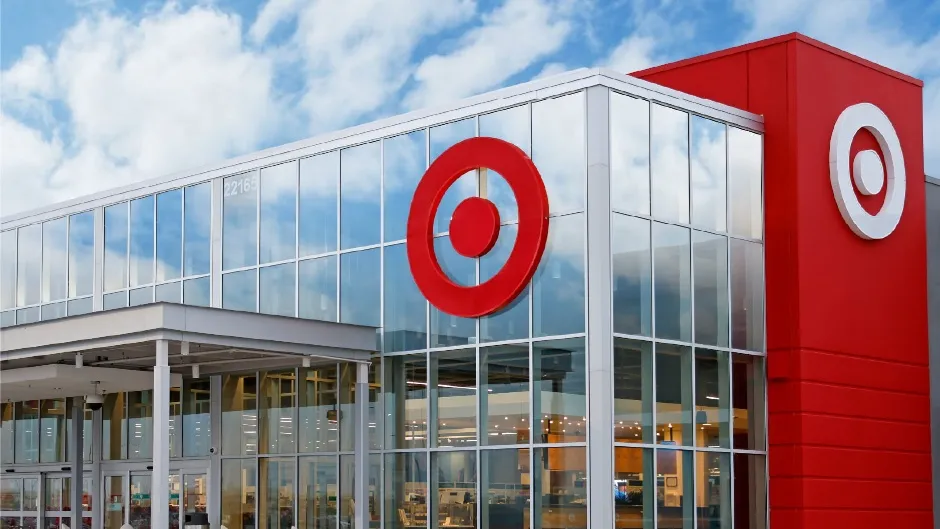
Target’s target market is middle- and higher-income households, often busy parents and younger adults, who want stylish, good-quality products at fair prices. About 79% of Target shoppers earn $40,000 a year or more, and they are more likely than average US shoppers to be millennials or Gen Z, according to Numerator.
Target sums up this promise in its slogan, “Expect More. Pay Less.” It sits between discount stores, which compete mainly on price, and department stores, which charge more for style. Below, you will find Target’s customer demographics, its four main segments, how its owned brands reach each group, and how its target market compares with Walmart’s.
Key Takeaways
- Target’s core customers are middle- and higher-income households: 47% earn $40,000 to $125,000 and 32% earn more than $125,000.
- Target is close to universal in the US: 78% of American households shopped there at least once in 2024.
- Target shoppers are loyal, with an 86% repeat rate and average spending of $1,087 a year.
- Owned brands like Cat & Jack, Good & Gather, and Threshold make up about 30% of Target’s merchandise sales.
- Under CEO Michael Fiddelke, Target is winning shoppers back in 2026, with comparable sales up 5.6% in the first quarter.
What Are Target’s Customer Demographics?
Target calls its customers “guests.” Numerator’s profile of Target shoppers, based on 2024 purchase data, gives the clearest picture of who they are:
| Demographic | Target Shoppers |
|---|---|
| Household income $40,000 to $125,000 | 47% |
| Household income over $125,000 | 32% |
| Household income under $40,000 | 21% |
| Homeowners | 68% |
| Live in suburban areas | 39% |
| Live in urban areas | 38% |
| Generation | More likely Gen Z and millennial than all US shoppers |
| Ethnicity | 15% more likely to be Asian and 11% more likely to be Hispanic than all US consumers |
Source: Numerator data for 2024, reported by Chain Store Age.
What is the typical Target customer profile? The typical Target guest is a homeowner in a suburb or city, earns a middle or higher income, and shops for the whole household. They visit often, buy across many categories in one trip, and care about style as much as price.
Who is the core Target customer? Target’s most valuable guests are parents with children at home. Kids’ clothing, baby products, school supplies, and household essentials bring them in, and home decor, beauty, and apparel keep them shopping on the same trip.
How Does Target Segment Its Market?
Target uses all four main types of market segmentation to shape its stores, products, and marketing.
Demographic Segmentation
Target focuses on income and life stage. Its core is middle- and higher-income families, which is why it stocks more design-led products than discount rivals. Younger shoppers matter too: Target shoppers skew toward millennials and Gen Z. Read more about this approach in our guide to demographic segmentation.
Geographic Segmentation
What is Target’s geographic market? Target operates only in the United States, with 1,995 stores at the end of fiscal 2025. Its shoppers are almost evenly split between suburbs (39%) and cities (38%).
To reach city shoppers, Target opens small-format stores near college campuses and dense neighborhoods. In the suburbs, it runs large stores with full grocery and home sections. It also offers same-day services such as Drive Up, Order Pickup, and delivery through its subsidiary Shipt.
Psychographic Segmentation
Target’s guests value style, convenience, and a pleasant shopping trip. Many enjoy browsing, which is why Target designs bright, open stores and rotates seasonal and designer collaboration collections. Its shoppers are also slightly more likely than average to buy organic products. See how brands use values and lifestyle in our guide to psychographic segmentation.
Behavioral Segmentation
What makes Target shoppers loyal? Target shoppers return often: Numerator found an 86% repeat rate and an average of 23 purchases per shopper in 2024. Target Circle, its free loyalty program, has more than 100 million members. Target Circle 360, a paid tier launched in 2024, adds unlimited same-day delivery for frequent shoppers.
How Do Target’s Owned Brands Reach Each Customer Group?
Target’s owned brands are one of its main tools for reaching specific shoppers. Owned and exclusive brands make up about 30% of Target’s merchandise sales, and they brought in more than $30 billion in 2023.
| Owned Brand | Category | Target Customer |
|---|---|---|
| Cat & Jack | Kids’ clothing | Parents of young children |
| Good & Gather | Grocery | Families shopping for food and snacks |
| up&up | Household and personal care | Value-focused shoppers buying essentials |
| Threshold | Home decor | Homeowners and new renters |
| Universal Thread, A New Day | Women’s clothing | Women seeking affordable everyday style |
| Goodfellow & Co | Men’s clothing | Men seeking simple, affordable basics |
| dealworthy | Low-price basics | Budget shoppers |
These brands let Target offer style at prices close to discount stores, and shoppers can only buy them at Target. That gives guests a reason to choose Target over Walmart or Amazon.
Who Are Target’s Customer Personas?
The personas below are illustrative examples built from the data above, not official Target profiles.
| Persona | Profile | What They Buy | Why They Choose Target |
|---|---|---|---|
| The busy parent | 30s to 40s, suburban homeowner, two kids | Cat & Jack, diapers, groceries, school supplies | One trip covers the whole family |
| The young city shopper | 20s, renter in an urban area | Beauty, Threshold decor, snacks | Small-format stores and stylish, affordable products |
| The student | Late teens to early 20s | Dorm supplies, beauty, clothing | Campus stores and back-to-school deals |
| The loyal deal-seeker | Any age, Target Circle member | Essentials with Circle offers | Rewards, deals, and same-day pickup |
How Is Target’s Target Market Different From Walmart’s?
Target and Walmart both sell groceries, household goods, and clothing, but they aim at different priorities. Walmart focuses on the lowest price for the widest audience. Target focuses on style and a better shopping experience at fair prices.
| Factor | Target | Walmart |
|---|---|---|
| Core promise | “Expect More. Pay Less.” | Everyday low prices |
| Core customer | Middle- and higher-income families seeking style | Broad mass market, with strong reach among price-focused shoppers |
| Product focus | Design-led owned brands, home, apparel, beauty | Groceries and essentials at the lowest price |
| Store footprint | About 2,000 US stores | Over 4,600 US Walmart stores |
The gap is narrowing. Numerator found in August 2026 that Walmart is adding Gen Z shoppers and households earning more than $100,000, the same groups Target relies on. For more on that rivalry, see our list of Walmart’s competitors.
What Is Target’s STP Strategy?
| STP Step | What Target Does |
|---|---|
| Segmentation | Splits shoppers by income, life stage, location, and shopping habits |
| Targeting | Focuses on middle- and higher-income families and younger adults who value style and convenience |
| Positioning | “Expect More. Pay Less.”: stylish, quality products at fair prices in a pleasant store |
Target uses differentiated targeting: one store format reaches several groups, with owned brands and departments tailored to each. Our guide to segmentation, targeting, and positioning explains each step of the model.
Who Does Target Not Target?
Target’s choices also show who it does not aim for:
- Shoppers who only want the lowest price: Walmart, Aldi, and dollar stores win on price alone.
- Bulk buyers: Costco and Sam’s Club serve shoppers who want large packs and membership pricing.
- Luxury shoppers: Target sells designer collaborations at mass prices, not luxury goods.
- Shoppers outside the US: Target closed its stores in Canada in 2015 and operates only in the United States.
How Is Target Winning Back Shoppers in 2026?
After three years of weak sales, Target is refocusing on its core guest. CEO Michael Fiddelke, who took over in February 2026, announced a $6 billion plan to remodel stores, improve staffing, and restore Target’s reputation for stylish, affordable clothing.
Early results are positive. Comparable sales rose 5.6% in the first quarter of 2026, the first increase after three quarterly declines. In the second quarter, net sales grew 5.3% to $26.5 billion, according to Target’s earnings release. For the full picture of Target’s strengths and risks, read our Target SWOT analysis.
Bottom Line
Target does not try to be the cheapest store in America. For me, its strength is that it knows exactly who its guest is: a busy household that wants style and quality without paying department store prices. The 2026 turnaround shows that when Target focuses on that guest, with better stores and clothing they want, shoppers come back. Brands like IKEA use the same idea in home furnishings: good design at prices most people can afford.
Frequently Asked Questions
Target calls its customers “guests” to reflect its focus on a welcoming, pleasant shopping experience. The term signals that Target wants shoppers to feel like visitors it is hosting, not just people completing a sale.
Target had 1,995 stores in the United States at the end of its 2025 fiscal year, in January 2026. Stores operate in all 50 states and range from large suburban stores to small formats near campuses and city centers.
Target serves a broad range of shoppers, but it leans toward middle- and higher-income households. About 32% of Target shoppers earn more than $125,000 a year, while 21% earn under $40,000, according to Numerator.
Yes. Target shoppers are more likely than average US shoppers to be Gen Z or millennials, according to Numerator. Target reaches younger shoppers with campus stores, beauty products, affordable fashion, and back-to-school deals.
Target’s slogan is “Expect More. Pay Less.” It sums up the store’s positioning: products with more style and quality than a typical discount store, at prices lower than department stores.
Target’s parent company started as Dayton Dry Goods in Minneapolis in 1902. The first Target store opened in 1962 in Roseville, Minnesota, and the company is still headquartered in Minneapolis.

