


An augmented product is a product that sellers enhance with extra services or benefits, like warranties, free installation, or customer support, to stand out from competitors. The core product meets the basic need. The augmented layer builds trust, adds value, and keeps customers coming back.
It is no easy feat to make your customers familiar with your product, service, or brand. Things get even more complicated when you are a startup with limited resources compared to the industry giants. Even if your product is on par with the more prominent brands in terms of quality, you must take other measures to stand apart from the competition. How do you do that?
One way to achieve that is through augmented products. Augmented products enable you to get the attention of your customers more efficiently. They make your customers feel like they’re getting a deal, a secret perk that nobody knows about, or a service that makes their life easy.
But what is an augmented product? In this article, you will learn what augmented products are and some successful examples of product augmentation in the business world.
What is an Augmented Product?
Augmented product, or product augmentation, refers to adding more value to a particular product with the help of enhanced features. These features increase the product’s perceived value without raising its price. Some examples of augmented products include coupons, discount offers, refund offers, free delivery, etc.
To understand the concept of augmented products in detail, it is important to learn about the following business terminologies.
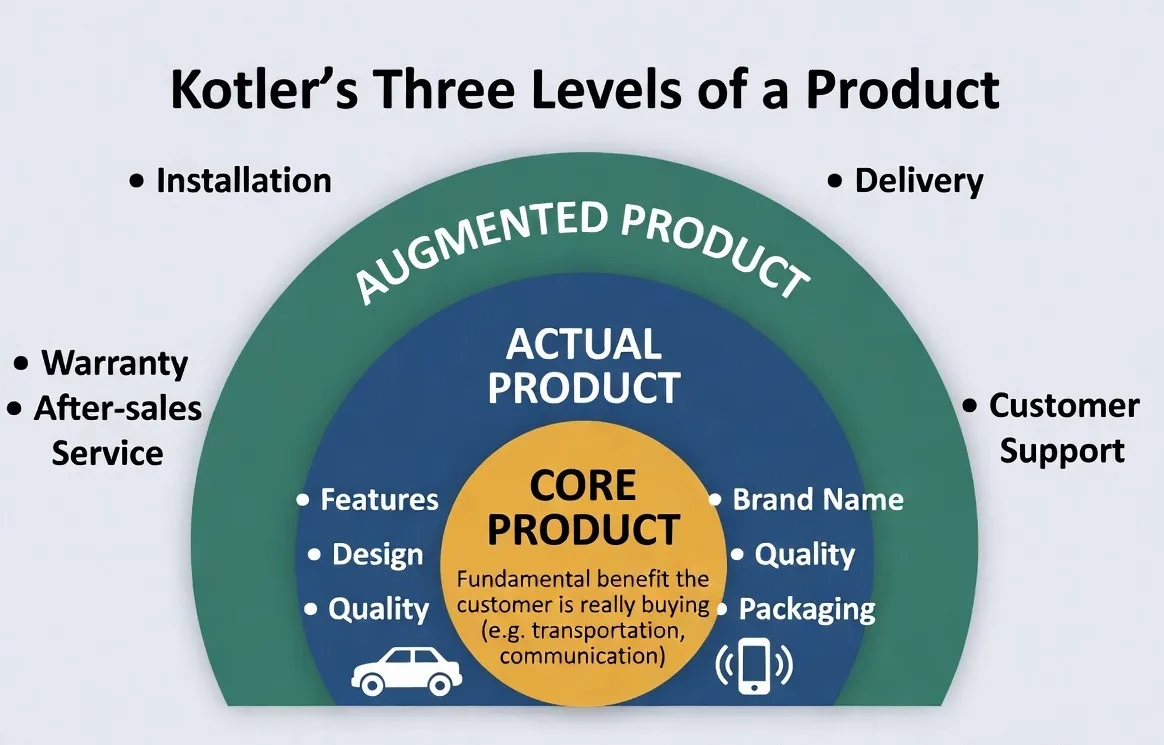
- Actual Product. The actual product is the product/service a customer pays for. An actual product lacks product augmentation but has gone through all the product development stages, such as ideation, manufacturing, and packaging, to be available for purchase.
- Core Product. A core product is not a tangible product. It is a set of concepts or ideas that explain how this product will benefit customers once developed. For example, the core product of an ergonomic chair manufacturer would be safe posture and comfort rather than the chair itself.
- Augmented Product. An augmented product is the value-addition that increases the perceived value of an actual product. For example, a chair manufacturer might offer free delivery to augment its chairs, which is the actual product.
Importance of Augmented Products
The world of business is no stranger to cutthroat competition. Companies are always looking to increase profit without increasing prices or compromising quality. In such circumstances, gaining a competitive advantage over more established brands and businesses might become difficult.
Product augmentation can substantially help startups stand out from the crowd by allowing them to deliver the same quality as popular brands while also delivering “something extra.” This extra feature, benefit, or experience attracts customers and increases brand awareness. Ultimately, augmented products result in market penetration, greater demand, and higher profits.
Common Types of Augmented Products
Augment products can take different forms depending on the nature of the business. Here are some common types of augmented products.
- Warranty. Warranty is arguably the most popular and coveted type of product augmentation. It is usually included in electronics and appliances. A warranty gives customers a sense of comfort in knowing that they can replace/fix the product if something goes wrong during the warranty period.
- Free Installation. Offered most commonly with delicate electronics, free installation is a value-adding perk for many customers. It also gives them the peace of mind that having a particular product installed by a professional will reduce the chances of accidents or loss.
- Free Delivery. Free delivery has become increasingly popular because of many e-commerce stores today. It can give an impression of saving a lot of money when customers make a big purchase. Some sellers offer free delivery under specific conditions, such as only when the amount exceeds a specific limit.
- Trial Periods. Also increasingly common with software/digital products, a free trial period can show customers whether the product is up to their expectations before they make a buying decision. Offering free trials goes a long way in increasing conversion rate and customer satisfaction.
- Updates. This type of augmented product is commonly available in software/digital products. For example, Microsoft offers free updates on its Windows operating system to keep it up to date in terms of security and features.
- Free Samples. Commonly associated with retail products, a free sample is a type of a free trial that lets customers experience what the product offers in a limited capacity. Many consumer categories, like cosmetics, food, health, hygiene, etc., offer free samples to their customers. It helps overcome purchasing anxiety and increases conversions.
- Refunds. A refund is a desirable feature for many customers, especially when they fear the product might not be the same as the seller claims. This type of product augmentation is common in many big box stores around the world. Refunds help build trust and customer loyalty.
Benefits of Augmented Products
Customer Retention
Augmented products are a time-tested way of increasing customer loyalty and, as a result, customer retention. Humans are psychologically inclined to like things that bring them value without spending money. When a business employs well-researched product augmentation, it sees repeat customers.
Brand Awareness
Augmented products spread brand awareness through word-of-mouth marketing, as people like to tell others when they get something for free. This ultimately creates social proof for your products or services. For example, a new ice cream parlor might see more new customers when the word gets around that they are giving free ice cream samples for the first three days after opening.
Product Differentiation
Standing apart from the competition is a classical benefit of augmented products. It is a proven way to gain a competitive advantage over brands not known for offering things for free.
For example, a famous car dealership in a town might feel challenged by a new car dealership startup that is offering free car inspections to customers.
Enhanced Customer Experience
Augmented products ultimately elevate customer experience and make them feel like they are leaving with something extra. Adding even a tiny perk can go a long way in making your business well-liked by customers.
Starbucks is a case study in this regard, as it offers its customers free water, WiFi, and a place to sit with a comforting ambiance. Even if customers don’t spend much, they will leave happy and likely return.
Increased Revenue
Ultimately, it’s all about more profit and higher margins. Every benefit of product augmentation, like repeat customers, brand awareness, and better consumer experience, will lead to more demand and growth. As a result, such a business will scale up consistently with higher and higher revenue figures.
What are examples of an augmented product?
Most products look the same on the shelf. The extras are what make buyers choose one brand over another. Here are 5 real examples from different industries.
1. Smartphones (Tech and Consumer Electronics)
Most people buy a phone for calls, messages, and internet access. But brands like Apple go further than just the hardware. Buy an iPhone and you get software updates for years. Buy a MacBook and free Apple TV+ months come with it. These extras cost the buyer nothing but add real value. That is the augmented product doing its job.
- Core Product: Instant communication, information gathering, and internet access.
- Actual Product: The physical smartphone hardware, operating system, and camera.
- Augmented Product: Free multi-year software updates, cloud storage trials, and protection plans like AppleCare+.
2. Cars (Automotive Industry)
Nobody buys a car just to own a machine. People buy freedom, convenience, and reliability. But two cars with similar specs can feel very different after the sale. One brand offers free roadside assistance. Another throws in a 100,000-mile warranty. Some dealerships cover your first year of maintenance at no charge. Those additions are what make a buyer sign the contract.
- Core Product: Independent personal transportation.
- Actual Product: The physical vehicle, engine specs, safety ratings, and brand design.
- Augmented Product: Free 24/7 roadside assistance, extended warranties, and complimentary first-year maintenance.
3. Hotel Stays (Hospitality and Tourism)
When someone books a hotel room, they just need a clean, safe place to sleep. That is the basic need. But hotels that include free breakfast, fast Wi-Fi, and free parking give guests a reason to come back. These are small things, but they change how a guest feels about the stay. A comfortable experience always beats just a room.
- Core Product: A safe and private place to sleep away from home.
- Actual Product: The physical room, bed, bathroom, and check-in service.
- Augmented Product: Complimentary breakfast, free high-speed Wi-Fi, secure parking, and late checkout.
4. Subscription Retail (E-Commerce)
Amazon Prime is one of the best examples of an augmented product in retail. You are not just buying products online; you are buying into a whole experience. Fast delivery, easy returns, and access to Prime Video all come with one membership. These extras keep customers loyal and make them less likely to shop elsewhere. The product is what you order. The membership perks are the augmented product.
- Core Product: Convenient digital shopping from home.
- Actual Product: The physical goods delivered to your door.
- Augmented Product: Free same-day shipping, hassle-free returns, and exclusive streaming perks.
5. Software as a Service (Digital Platforms)
When you sign up for a SaaS tool, you are buying a solution to a business problem. That is the core of it. But the best platforms do more. They offer free 30-day trials so you can test before paying. They add live chat support, training videos, and automatic updates. These features reduce risk and build trust with new users. Customers stay not just because the tool works, but because the experience feels worth it.
“Before a business can effectively augment an individual item, it must first strategically organize its entire product mix strategy to understand how different lines serve different target markets.
- Core Product: Automated tools to solve a specific business workflow problem.
- Actual Product: The software interface, code, and digital dashboard.
- Augmented Product: Risk-free trials, live chat support, training libraries, and automatic feature upgrades.
Conclusion
Most businesses only focus on making a better product. Only few focus on making the experience around it better. That is where product augmentation changes the game. When you add a warranty, free delivery, 24/7 customer support, or free installation, you exceed customer expectations. That feeling of extra value not only builds trust but turns a one-time buyer into a loyal customer.
The core product gets attention. The actual product closes the sale. But the augmented product is what keeps people coming back.
Brands that invest in augmentation stop competing on price. They justify premium pricing because customers see the total value, not just the price tag. In crowded markets, that is the real differentiation. Not a price war. Not a flashier package. Just a better overall experience that gives customers a reason to choose you every single time.
Frequently Asked Questions (FAQ)
The actual product is the physical, tangible item or core service you buy (like a car or a smartphone). The augmented product consists of the non-physical, value-added extras bundled with it (like a warranty, free delivery, or customer support) to improve the overall buying experience
Yes. Digital services can absolutely be augmented. Suppose a SaaS platform augments its core software by offering free 30-day trials, live chat support, video training libraries, and even an automatic feature upgrade that cost nothing extra but add value.
Product augmentation allows businesses to stand out in crowded markets, justify premium prices, and build long-term customer loyalty. It shifts the consumer’s focus from just looking at the price tag to evaluating the total value and peace of mind they receive.

