


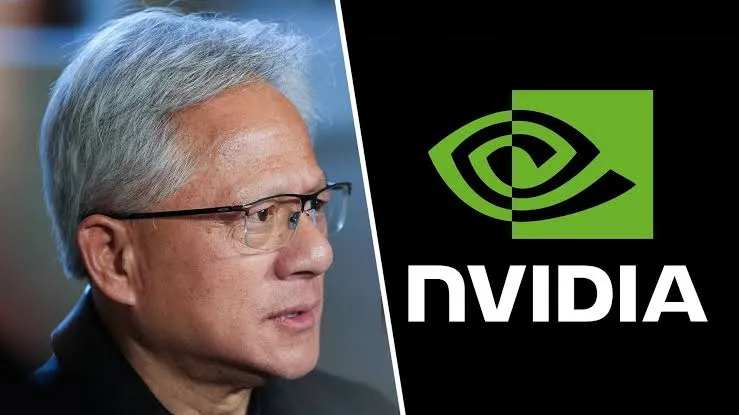
A Nvidia PESTLE analysis looks at the political, economic, social, technological, legal and environmental forces outside Nvidia that shape its business. In 2026, the political and legal factors matter most, because US export rules now decide where and how Nvidia’s AI chips can be sold or even rented.
November 2026 made that clear. In just two weeks, Washington tightened chip rules, California served Nvidia with a subpoena, and Nvidia’s board accepted and then reversed Jensen Huang’s resignation as CEO. Below, I explain each PESTLE factor using Nvidia’s filings and official sources, add a timeline of those events, and share what I think they mean for the company.
Key Takeaways
- A new US rule that took effect on November 19, 2026, requires licenses to rent large amounts of AI computing to China-based companies through overseas data centers.
- Nvidia’s Q4 outlook assumes no data center compute revenue from China, even as total quarterly revenue reached $115.8 billion.
- California’s attorney general is investigating whether Nvidia’s chips or confidential information reached China and whether investors were misled.
- Nvidia’s annual report warns that data centers depend on clean water and predictable energy, which ties its growth to power grids.
- Jensen Huang resigned as CEO on November 11, 2026, and the board unanimously reinstated him on November 23.
What Is Nvidia’s PESTLE Analysis at a Glance?
| Factor | Main Force in 2026 | Impact on Nvidia |
|---|---|---|
| Political | US export controls and China tensions | Negative: lost China data center sales |
| Economic | AI infrastructure spending | Positive: revenue up 103% in Q3 |
| Social | Trust in leadership and AI concerns | Mixed: brand tied to its founder |
| Technological | CUDA, Vera Rubin, custom chips | Positive, with rising competition |
| Legal | New export rule, subpoena, lawsuits | Negative: higher compliance costs |
| Environmental | Power and water for data centers | Mixed: limits how fast customers can build |
Try it yourself
Map the outside forces on any company with our free PESTLE analysis tool and guide.
What Happened to Nvidia in November 2026?
Most of this PESTLE analysis is shaped by one busy month. Here is the sequence, based on Nvidia’s filings and releases, government notices and news reports:
| Date (2026) | What Happened |
|---|---|
| November 9 | Shareholder class action filed against Nvidia and Huang over statements about Megaspeed |
| November 11 | Board accepted Huang’s resignation; Colette Kress named interim CEO (announced November 12) |
| November 16 | Commerce Department issued the remote-access export rule |
| November 17 | Q3 revenue up 103%; new oversight committee; board said it would not rehire Huang |
| November 19 | Remote-access rule took effect; California served an investigative subpoena |
| November 23 | Board unanimously reinstated Huang as CEO; hours later, Megaspeed and six other firms were added to the US Entity List |
What Political Factors Affect Nvidia?
Political factors are government actions and relations between countries. For Nvidia, they now come down to one issue: who is allowed to use its most advanced AI chips.
How Have US Export Controls Hit Nvidia?
US export rules have cut Nvidia off from most of its China data center business. In April 2025, the US government told Nvidia it needed a license to export its H20 chip to China, and Nvidia took a $4.5 billion charge, according to its annual report. Its revenue from customers based in China, including Hong Kong, fell to $19.7 billion in fiscal 2026 from $25.0 billion a year earlier.
Another small door opened in February 2026. The US granted a license to ship small amounts of H200 chips to specific China-based customers. But those chips must pass a US inspection first, which brings a 25% import tariff. Nvidia said it had not yet earned any revenue from them. Its Q4 outlook now assumes no data center compute revenue from China at all.
What Is the November 16 Remote-Access Rule?
On November 16, 2026, the Commerce Department’s Bureau of Industry and Security (BIS) issued a rule it said was “written by and at the direction of” the Treasury Department and the National Security Council, according to its press release. It targets a gap: Chinese companies renting Nvidia computing power at data centers outside China.
The rule took effect on November 19. According to a Morgan Lewis client alert, data centers that can supply more than 12 million units of computing power to companies based in China or other restricted countries now need a license. TechCrunch estimated that threshold at roughly 750 Nvidia H100 or H200 chips. Advanced chips going to Singapore, Malaysia, Indonesia, Thailand and Brazil also need a license, unless they go to US-headquartered companies.
For me, this is the most important political change for Nvidia this year. US officials see overseas data centers as a way Chinese firms reached chips they could not buy at home. That route now runs through a US license, which means slower deals and more paperwork for Nvidia’s cloud customers in the region.
How Does China’s Response Affect Nvidia?
The pressure comes from both sides. Nvidia’s annual report says the Chinese government has encouraged customers to buy from Chinese chipmakers and discouraged them from buying Nvidia’s data center products, including chips designed to meet US rules. So even when Washington allows a sale, Beijing can still discourage it, which leaves Nvidia’s China business exposed to both governments.
China’s regulators have also used their own rules. On September 15, 2025, China’s antitrust regulators published a preliminary finding that Nvidia’s compliance with US export controls broke the terms of China’s approval of its Mellanox acquisition, the annual report says. Nvidia is caught between two governments. Each one’s move can trigger a response from the other, and Nvidia pays the price in lost sales or legal risk.
What Economic Factors Affect Nvidia?
Economic factors include spending, interest rates and market conditions. Right now, the economy around AI is working strongly in Nvidia’s favor.
How Is AI Spending Driving Nvidia’s Growth?
Cloud companies, AI labs and businesses are spending heavily on AI data centers, and Nvidia is the main supplier. Its Q3 fiscal 2027 revenue rose 103% to $115.8 billion, and data center revenue rose 110% to $107.6 billion. Nvidia expects about $130 billion in Q4, a quarter with an extra week.
That spending is concentrated. Two direct customers made up 22% and 14% of Nvidia’s fiscal 2026 revenue, according to its annual report. For me, this is the economic factor to watch: when a few cloud giants slow their building, Nvidia feels it fast. A pause by one large buyer could move its quarterly results more than any change in gaming demand.
How Do Interest Rates and Tariffs Affect Nvidia?
Nvidia’s annual report lists inflation, higher interest rates, tighter credit, tariffs and lower business spending as risks. AI data centers cost billions to build, so higher borrowing costs can delay projects even when demand is strong. Tariffs are already part of the picture. Any H200 chips shipped to China under the new license face a 25% tariff, and Nvidia says it may not be able to pass that cost on to customers. Trade policy can change the price of a sale before the chip even leaves the US.
How Did Investors React to the November Turmoil?
Nvidia’s stock moved sharply with news about its CEO and China. Its shares fell 4.27% on November 9, the class action complaint says, and as much as 14% at one point on November 12, when the CEO change was announced. They then rose about 31.5% on November 23, the day Huang returned, Al Jazeera reported.
Those swings show how much investor confidence depends on political and leadership news, not just sales. For a company this large, the share price affects stock-based pay, deal-making power and how easily it can hire top engineers. A falling price also gives critics and plaintiffs a measurable loss to point to, as the class action shows.
What Social Factors Affect Nvidia?
Social factors cover culture, trends and public opinion, one of the external environment factors that affect business of every size. For Nvidia, three matter most: gaming culture, public concern about AI, and trust in its leader.
How Do Gaming and Creator Trends Help Nvidia?
Nvidia started in gaming, and gamers are still a loyal base. Its annual report points to eSports, game streamers and modders as forces behind PC gaming’s growth, and gaming revenue rose 41% to $16.0 billion in fiscal 2026. Social trends can also work against it: the report warns that China’s limits on how long people can play games may hurt Nvidia’s gaming sales there.
Why Does Public Concern About AI Matter?
As AI spreads, so do public worries about copyright, privacy, jobs and human rights. Nvidia’s annual report warns that AI products seen as harmful could hurt its brand or bring legal liability. This matters because Nvidia now sells AI software and models, not just chips, so public opinion about AI affects demand for its whole platform.
How Did the CEO Crisis Test Trust in Nvidia?
Nvidia’s brand is closely tied to Jensen Huang, its co-founder. On November 17, board chair Harvey C. Jones said on the earnings call that the board did “not intend to reinstate” Huang. Six days later, the board reversed course after “input from senior levels of the United States government,” Nvidia said. President Trump said he personally intervened with the board, Al Jazeera reported.
For me, this is the social factor that changed the most in 2026. Customers, employees and investors clearly still trust Huang. But a public reversal under political pressure raises a new question for a global company: can buyers outside the US trust that Nvidia’s leadership is independent? You can read how control works at the company in our guide on who owns Nvidia.
What Technological Factors Affect Nvidia?
Technological factors include innovation, new products and competing technologies. This is where Nvidia is strongest, but also where rivals are most active.
Why Is CUDA Nvidia’s Biggest Technological Advantage?
Nvidia’s lead rests on its software as much as its chips. More than 7.5 million developers use CUDA and Nvidia’s other software tools, according to its annual report. Once companies build AI on CUDA, moving to another chip means rewriting code, which is a strong competitive advantage.
Nvidia also keeps raising the bar. Its Vera Rubin systems have shipped and are “the fastest product ramp in the company’s history,” running at Google Cloud, Microsoft Azure, Oracle Cloud, CoreWeave and Nebius, according to its Q3 release. Its planned purchase of Hugging Face links it more closely to the developers who share AI models.
Which Technologies Could Challenge Nvidia?
The biggest technological threat comes from Nvidia’s own customers. Its annual report names Alibaba, Alphabet, Amazon, Baidu, Huawei and Microsoft as cloud companies building their own AI chips. It also names AMD, Huawei and Intel as GPU and accelerator rivals, and our guide to Nvidia’s competitors shows how crowded the AI chip market is.
Export rules add a twist. Because Nvidia cannot sell its best chips in China, Chinese chipmakers such as Huawei have room to grow at home. Over time, the technology race may split into a US-led system and a China-led system, with Nvidia shut out of one of them.
What Legal Factors Affect Nvidia?
Legal factors cover laws, regulations and court cases. In November 2026, Nvidia’s legal risks grew faster than any other PESTLE factor.
What Does the New Export Rule Require Legally?
The remote-access rule turns renting computing power into a regulated export. Data center operators already serving restricted customers must get a license within 90 days of the rule taking effect, according to Morgan Lewis. Shipments to US-headquartered companies in the five named countries are exempt, but the exporter must file monthly reports with BIS.
The rule also formally rescinded the Biden-era AI Diffusion Rule and tightened checks on chipmaking: foundries can no longer rely on simple transistor-count checks for chips designed by companies in restricted countries. For Nvidia, that means more checks on who its customers’ customers are, and more time and legal cost before large orders ship to data centers outside the US.
What Is the Megaspeed Entity List Addition?
Megaspeed, a Singapore-based data center company, sits at the center of the November story. US investigators opened a probe into it in 2024, and Nvidia placed it on its own “no sell” list in June 2025, according to a joint Commerce Department and Justice Department statement reported by Business Today Malaysia. No charges against Megaspeed were announced.
On November 23, hours after Huang’s return, BIS added Megaspeed International and six other firms to the Entity List, Al Jazeera reported: three in Malaysia, two in Singapore and one in Thailand. Anyone shipping advanced US technology to them now needs an export license. For Nvidia, the listing confirms that regulators are watching not only its chips but also the data centers that run them.
Why Did California Subpoena Nvidia?
On November 19, 2026, California Attorney General Rob Bonta served Nvidia with an investigative subpoena, according to his office’s announcement. His office wants to know whether Nvidia’s advanced chips or confidential information may have gone to China, and whether Nvidia misled investors and the public.
“Companies cannot mislead their investors,” Bonta said. The subpoena is a request for information, not a finding of wrongdoing. Still, it brings a state securities question on top of federal export rules, so Nvidia must now answer regulators at two levels of government about the same facts.
What Other Lawsuits and Probes Does Nvidia Face?
A shareholder class action, Kistenmacher v. NVIDIA Corporation, was filed in California federal court on November 9, 2026. It claims Nvidia and Huang made misleading statements, or left out facts, about Nvidia’s dealings with Megaspeed between October 9, 2025, and November 8, 2026. The Wall Street Journal also reported that the SEC is investigating Nvidia, according to Reuters, and the SEC declined to comment.
Regulators abroad are watching too. Nvidia’s annual report says regulators in the European Union, the US, the UK, South Korea, Japan and China have shown interest in its AI business, and France’s competition authority collected information from it. Separately, Nvidia and SoftBank announced in February 2022 that they had ended Nvidia’s planned purchase of Arm, a reminder that large chip deals face close review.
What Environmental Factors Affect Nvidia?
Environmental factors cover climate, energy and natural resources. For Nvidia, the main issue is the power and water its customers need to run AI data centers.
How Do Power and Water Limit Nvidia’s Growth?
Nvidia’s annual report says data centers “depend on access to clean water and predictable energy.” Power or water shortages, land limits or permitting rules could stop customers from building more capacity, which would reduce demand for Nvidia’s chips. In other words, Nvidia’s sales depend partly on power grids it doesn’t own.
The report also warns that concerns about “the high absolute energy requirements of our GPUs” could hurt its business, even though its chips are more efficient than alternatives. Climate change adds another risk: extreme heat, wind and dry conditions in Northern California can lead to power shutoffs near its Santa Clara headquarters.
How Is Nvidia Responding to Energy Concerns?
Nvidia is selling efficiency as part of its product. Its Q3 release highlights NVIDIA DSX, designed to reduce AI factory power needs and enable “near-zero facility cooling water consumption.” It also points to an Australian AI buildout of up to 2 gigawatts by 2027. For me, energy is the factor most people underrate. A customer that can’t get power can’t install another rack, no matter how good the chip is. Nvidia’s long-term growth depends on whether its efficiency gains keep pace with the power its customers need.
How Can You Use Nvidia’s PESTLE Analysis?
A PESTLE analysis is most useful when you connect outside forces to decisions. Here is how I would apply this one:
- Rank the factors. For Nvidia, political and legal factors carry the most weight right now, so they deserve the most attention.
- Link each factor to a number. Tie export rules to China revenue, and AI spending to data center sales.
- Pair it with a SWOT. PESTLE shows outside forces; our Nvidia SWOT analysis shows Nvidia’s own strengths and weaknesses.
- Update it often. Nvidia’s outside environment changed several times in one month.
What Should You Watch Next?
- Whether the Entity List additions are finalized and how licenses are reviewed
- Public comments on the remote-access rule, due in January 2027
- Any outcome from the California subpoena and the reported SEC inquiry
- Court rulings in the Kistenmacher class action
- Q4 fiscal 2027 results in February 2027, and any China revenue from H200 licenses
My Take: What Connects Nvidia’s PESTLE Factors?
- Politics now sets Nvidia’s market size. Export rules decide where its chips can be sold, and now where they can be rented.
- Legal risk follows the political risk. The subpoena, the class action and the Entity List all trace back to the same China questions.
- Physical limits are the quiet risk. Power and water may cap growth before demand does.
Bottom Line
Nvidia’s revenue doubled from a year ago and its technology lead is strong, but its outside environment is now crowded with rules, probes and political pressure. For me, the company that once had to win only on engineering now has to win on compliance, trust and energy as well. How well it handles Washington, Beijing and the power grid will shape its next few years as much as any new chip.
Educational analysis, not investment advice.
Sources: NVIDIA Q3 fiscal 2027 results; NVIDIA fiscal 2026 Form 10-K; BIS remote-access rule press release; Morgan Lewis and Greenberg Traurig client alerts on the remote-access rule; California Attorney General subpoena announcement; NVIDIA newsroom (February 2022; November 12, 17 and 23, 2026); NVIDIA Form 8-K (November 2026); Kistenmacher v. NVIDIA Corp. complaint; TechCrunch; Al Jazeera; Business Today Malaysia; Reuters; Nasdaq.
Frequently Asked Questions
US export controls are the biggest external threat. They have shut Nvidia out of most of China’s data center market, and a new November 2026 rule now limits renting its chips to Chinese companies through overseas data centers.
Only in small amounts. A February 2026 US license allows H200 shipments to specific China-based customers, but the chips must pass a US inspection that brings a 25% tariff. Nvidia said it had not yet earned revenue from them.
Chips shipped to US-headquartered companies in Singapore, Malaysia, Indonesia, Thailand and Brazil are exempt, according to Morgan Lewis, but the exporter must report monthly to BIS. The rule mainly targets computing rented to China-based firms.
A PESTLE analysis covers outside forces such as laws, politics and the economy. A SWOT analysis adds Nvidia’s internal strengths and weaknesses, such as its CUDA software and customer concentration, to those outside opportunities and threats.
No. Nvidia designs its chips and relies on foundries such as TSMC and Samsung to make them. Its annual report says its supply chain is mainly concentrated in Asia, and it is expanding into the US and Latin America.

