


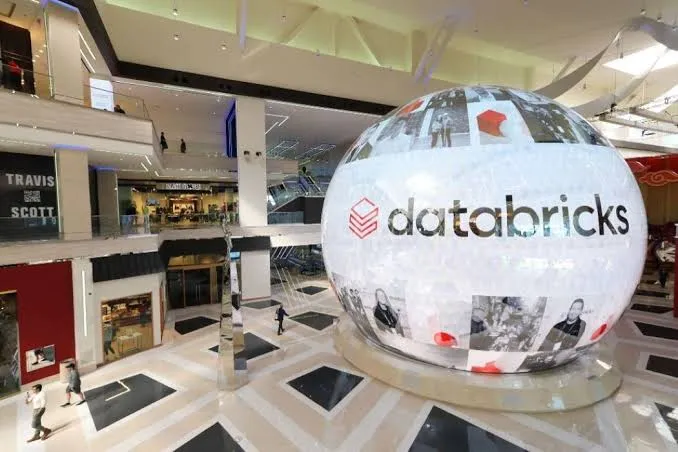
Databricks is owned by its seven co-founders, its employees and a large group of investors, including Coatue, Thrive Capital, Andreessen Horowitz, Insight Partners, Fidelity and Microsoft. It is a private company, so no single owner controls it, and it has never published how much each shareholder owns.
Databricks is also one of the most valuable private companies in the world. Investors valued it at $190 billion in August 2026, and it is reportedly in talks to raise money at about $225 billion. Below, I explain who founded Databricks, who invested in it, whether Microsoft owns it, how rich its founders are, and whether you can buy Databricks stock.
Key Takeaways
- Databricks was founded in 2013 by seven UC Berkeley researchers from the lab that built Apache Spark, including CEO Ali Ghodsi.
- It raised $5 billion at a $190 billion valuation in August 2026, in a round led by Coatue, according to Databricks.
- Microsoft is an investor and partner through Azure Databricks, but it does not own Databricks.
- Four co-founders are billionaires on Forbes’ real-time list, led by Ali Ghodsi at $7.6 billion.
- Databricks is still private, so its shares don’t trade on a stock exchange.
Who Owns Databricks in 2026?
Databricks’ owners fall into three groups. Because the company is private, it has not disclosed exact percentages, so this table shows who owns it, not how much each holds:
| Owner group | Who is in it | What we know |
|---|---|---|
| Founders | Ali Ghodsi, Ion Stoica, Matei Zaharia, Patrick Wendell, Reynold Xin, Andy Konwinski, Arsalan Tavakoli-Shiraji | Four are billionaires, according to Forbes |
| Investors | Coatue, Thrive Capital, Andreessen Horowitz, Insight Partners, Fidelity, NEA, Microsoft and dozens more | Named in Databricks’ funding announcements |
| Employees | About 10,000 staff, according to Wikipedia | Can sell some shares in regular tender offers |
Some websites publish estimated stakes for each investor, but Databricks has never released a shareholder list. For me, the honest answer is that we know who owns Databricks, but not the exact split. Being private also means it doesn’t have to publish one, unlike a public company, as our article on the variou types of companies explains.
What Is Databricks?
Databricks is a data and AI company based in San Francisco. Its software helps businesses store, organize and analyze large amounts of data. Companies also use it to build AI tools, on what Databricks calls a “data lakehouse.” It grew out of Apache Spark, a data processing engine built at UC Berkeley, and it now earns revenue at a run-rate of more than $7 billion a year.
Who Founded Databricks?
Databricks was founded in 2013 by seven researchers from UC Berkeley’s AMPLab, the lab where Apache Spark was built, according to Wikipedia. Its founders page names them as Ali Ghodsi, Ion Stoica, Matei Zaharia, Patrick Wendell, Reynold Xin, Andy Konwinski and Arsalan Tavakoli-Shiraji. Matei Zaharia created Spark as a 24-year-old PhD student, Forbes says.
Ion Stoica served as Databricks’ first CEO from 2013 until early 2016, when Ali Ghodsi took over. Ghodsi had joined in 2013 as a part-time engineer and was tapped to lead the company while it struggled to generate revenue, Forbes reports. For me, that turnaround is the real founding story: the company only became a giant after the founders changed who led it.
How Much Are the Databricks Founders Worth?
Four Databricks co-founders appear on Forbes’ real-time billionaires list. Here are their estimated fortunes as of November 25, 2026:
| Co-founder | Role | Forbes net worth |
|---|---|---|
| Ali Ghodsi | CEO | $7.6 billion |
| Ion Stoica | Executive chairman | $7.0 billion |
| Matei Zaharia | Chief technology officer | $7.0 billion |
| Andy Konwinski | Co-founder; no longer active at Databricks | $2.1 billion |
Forbes bases most of these figures on Databricks’ $190 billion valuation, though Konwinski’s profile was last updated when the company was valued at $134 billion. He also co-founded the AI search startup Perplexity. The other three co-founders do not have public Forbes billionaire profiles.
Who Are Databricks’ Largest Investors?
Databricks has raised money from a long list of venture capital firms, asset managers, banks and tech companies. Its August 2026 round was led by Coatue, with Blackstone, MGX and accounts advised by T. Rowe Price, and new investors such as Sixth Street Growth, Point72 and TPG, according to Databricks.
Existing investors named in that announcement include Andreessen Horowitz, Thrive Capital, Insight Partners, Fidelity, Franklin Templeton, NEA, Goldman Sachs Alternatives, J.P. Morgan Private Capital, Morgan Stanley, Temasek, GIC and Ontario Teachers’. Earlier, in February 2026, JPMorgan Chase expanded its stake, and Microsoft, Qatar Investment Authority, UBS-associated funds and others joined, Databricks said.
| Investor | Role in Databricks’ funding |
|---|---|
| Andreessen Horowitz | Led its first round in 2013 and several later rounds |
| Thrive Capital | Led the $10 billion Series J (2024) |
| Insight Partners and Fidelity (with J.P. Morgan) | Co-led the Series L (2025) |
| Coatue | Led the $5 billion round at $190 billion (August 2026) |
| JPMorgan Chase | Expanded its stake and led $2 billion in debt (February 2026) |
| Microsoft | Invested in 2019 and again in February 2026 |
Is Databricks Owned by Microsoft?
No. Microsoft is an investor and a close partner, but it does not own Databricks. Microsoft first invested in 2019, joined Databricks’ February 2026 funding, and has offered the platform to its cloud customers as Azure Databricks since 2017, according to Wikipedia.
In July 2026, the two companies expanded their partnership into the 2030s, with Microsoft bringing Databricks tools, including its Genie chatbot, into Microsoft 365, Teams and Copilot. Databricks also runs on Amazon Web Services and Google Cloud, according to Wikipedia. See how Microsoft competes across cloud and AI in our guide to Microsoft’s competitors.
How Has Databricks’ Valuation Grown?
Databricks has raised money many times, and each round lifted its value. Here are the main milestones, based on Wikipedia and Databricks’ announcements:
| Date | Round | Amount | Valuation |
|---|---|---|---|
| 2013 | Series A (led by Andreessen Horowitz) | $13.9 million | Not disclosed |
| Early 2021 | Series G | $1 billion | $28 billion |
| December 2024 | Series J (led by Thrive Capital) | $10 billion | $62 billion |
| August 2025 | Series K | $1 billion | Over $100 billion |
| February 2026 | Series L (expanded) | About $5 billion equity plus $2 billion debt | $134 billion |
| August 2026 | Strategic round (led by Coatue) | $5 billion | $190 billion |
| November 2026 | Early talks, per the Wall Street Journal | Several billion | About $225 billion |
Each round dilutes earlier owners, which means they own a smaller share of a much more valuable company. That is why the founders’ stakes are worth billions even though new investors keep joining. It also explains why Databricks keeps raising privately: each new round at a higher price lets early holders and employees see their paper wealth grow without a stock listing.
How Much Revenue Does Databricks Make?
Databricks is growing fast and already makes money. It passed a $7 billion revenue run-rate in 2026, with growth of more than 80% a year in its second quarter. It also reported positive adjusted free cash flow over the last 12 months, the company said in August. It also counts more than 1,000 customers that each spend over $1 million a year.
That growth sped up during 2026. In February, Databricks reported a $5.4 billion run-rate growing more than 65%. For me, this is why investors keep paying more: a company that grows this fast at this size, and still generates cash, is rare in software. It is a clear competitive advantage in a crowded data market.
Who Runs Databricks?
Ali Ghodsi has been CEO of Databricks since 2016. He is a dual Swedish-American citizen whose family fled Iran during the 1979 revolution, according to Forbes. He grew up in Sweden and earned his PhD at KTH Royal Institute of Technology. So the answer to the common question “Is the Databricks CEO Indian?” is no.
Ion Stoica, a UC Berkeley computer science professor who also co-founded Conviva, is executive chairman, and Matei Zaharia is chief technology officer, Forbes says. Having three founders still in top roles is part of why Databricks feels founder-led, even with dozens of large investors on its shareholder list.
What Companies Does Databricks Own?
Databricks has grown by buying other companies, especially in AI and databases. Its biggest deals include MosaicML, an AI model startup, in 2023. In 2024, it paid over $1 billion for Tabular, the company behind the Apache Iceberg data table format. In 2025, it bought Neon, a database startup, for around $1 billion, according to Wikipedia.
These acquisitions help Databricks offer more of what businesses need to build AI in one place. For me, they also show how its owners use the money they raise: not just to grow sales, but to buy technology that keeps customers on the platform.
Can You Buy Databricks Stock?
Not yet. Databricks is a private company, so its shares don’t trade on any stock exchange, and you can’t buy them through a normal brokerage account. Employees can sell some of their shares through regular tender offers, The Next Web reported. Ghodsi has described running these yearly tender offers as one of the burdens of staying private.
Ali Ghodsi has said “We will go public,” but not right now. On the All-In podcast, he said ups and downs in the AI market make a listing distracting, The Next Web reported in November 2026. Meanwhile, the Wall Street Journal reported that Databricks is in early talks to raise several billion dollars at about $225 billion. Compare this with how OpenAI’s ownership works, since it is also staying private for now.
How Does Databricks Compare With Snowflake?
Snowflake is the company most often compared with Databricks, with “Databricks vs Snowflake” drawing about 5,400 searches a month. Their ownership is very different. Snowflake has been a public company on the New York Stock Exchange (ticker SNOW) since September 2020, so anyone can buy its shares. Sridhar Ramaswamy has been its CEO since February 2024, according to Wikipedia.
Databricks, by contrast, is still owned privately by its founders, employees and investors. For me, this is the biggest ownership difference between the two rivals. Snowflake answers to public shareholders every quarter. Databricks can keep investing for growth without that pressure, as long as private investors keep funding it.
My Take: What Makes Databricks’ Ownership Unusual?
- Founders still run the company. Ghodsi, Stoica and Zaharia hold the top jobs more than 13 years after founding it.
- The owner list is huge, but the split is secret. Dozens of big investors own shares, and none of the percentages are public.
- Private, but behaving like a public giant. It has more than $7 billion in revenue run-rate and positive cash flow, yet it keeps raising private money. Rival AI firm Anthropic went public in 2026, as our guide on who owns Anthropic explains.
Bottom Line
Databricks is owned by its seven co-founders, its employees and a long list of investors. They include Coatue, Thrive Capital, Andreessen Horowitz, Insight Partners and Fidelity, with Microsoft as a partner and minority investor. For me, the key point is that no single investor is known to control it, and the founders still run the company. Until Databricks lists its shares, its exact ownership split will stay private.
Educational analysis, not investment advice.
Sources: Databricks press releases (February 9 and August 13, 2026); Databricks founders page; Forbes profiles of Ali Ghodsi, Ion Stoica, Matei Zaharia and Andy Konwinski (accessed November 25, 2026); The Next Web, citing the Wall Street Journal (November 21, 2026); Wikipedia (Databricks; Snowflake Inc.).
Frequently Asked Questions
Databricks was founded in 2013 in San Francisco by seven researchers from UC Berkeley’s AMPLab, the lab that built Apache Spark. Ion Stoica was its first CEO, and Ali Ghodsi took over in 2016.
Databricks reported positive adjusted free cash flow over the 12 months to mid-2026, the company said in August. It has not published full profit figures, because as a private company it does not have to.
Investors valued Databricks at $190 billion in its August 2026 funding round. A valuation is what investors pay for shares, not a company’s net worth. In November 2026, the Wall Street Journal reported talks at about $225 billion.
Yes, Nvidia is an investor. It co-led Databricks’ $500 million Series I round in September 2023 with Capital One Ventures, according to Wikipedia. Like other investors, its stake has not been disclosed.
Databricks has about 10,000 employees as of 2026, according to Wikipedia. Many of them hold shares, and they can sell some through the company’s regular tender offers.
No. Databricks runs on Amazon Web Services, as well as Microsoft Azure and Google Cloud, but none of these cloud providers owns it. Databricks remains an independent, privately held company.

