


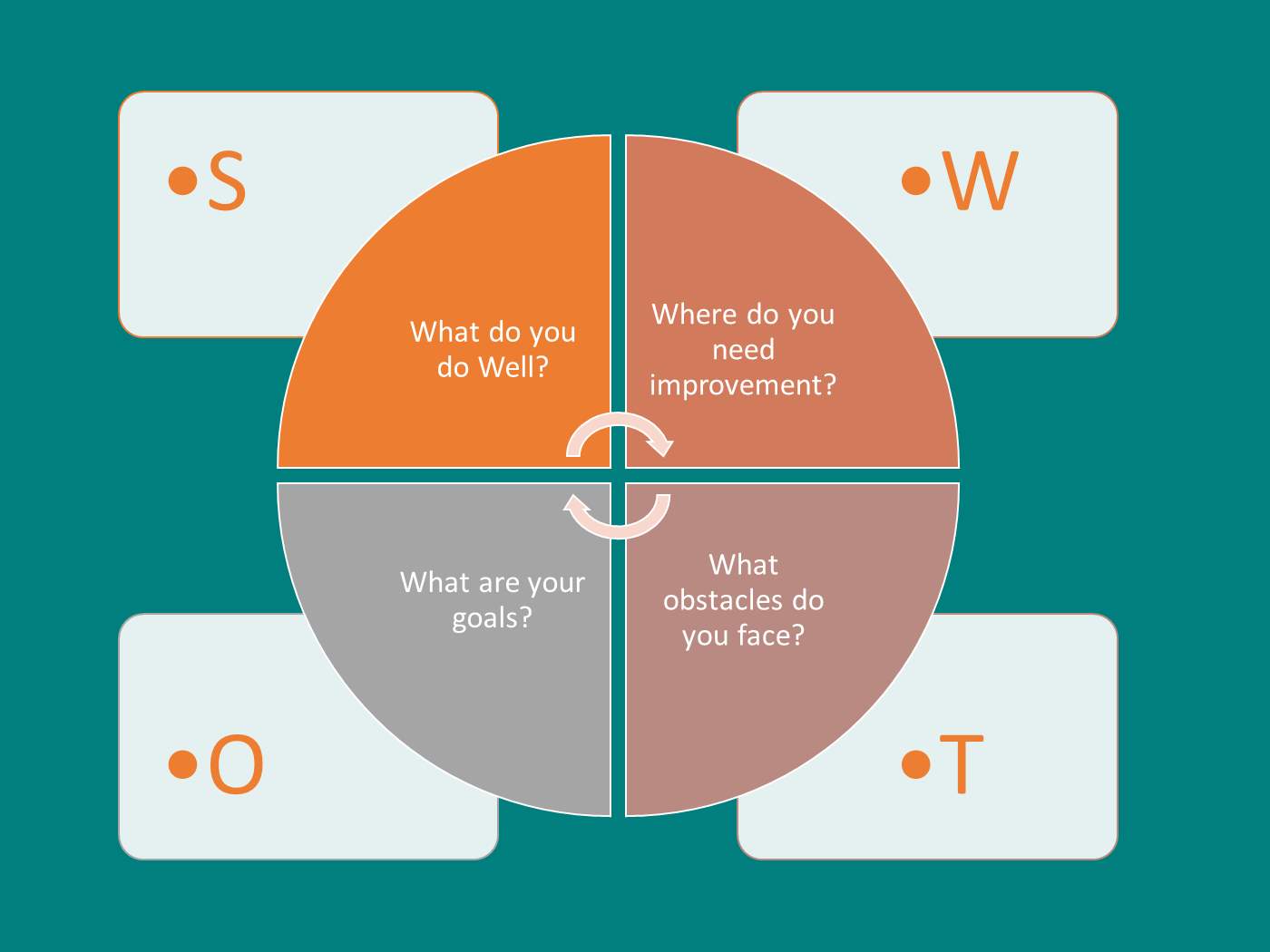
A SWOT analysis (also known as a SWOT matrix) is a strategic planning tool used to evaluate a company’s internal strengths and weaknesses, alongside its external opportunities and threats. Businesses use this framework to identify their competitive advantages, uncover new market opportunities, and protect their operations against potential industry risks.
Why is a SWOT analysis important in strategic planning?
When analyzing an organization, whether auditing internal policies or mapping market shifts, the ultimate goal is to formulate actionable strategy. A successful SWOT matrix demonstrates exactly how a business can deploy its core strengths and external opportunities to effectively neutralize internal weaknesses and external threats.
Because macroeconomic conditions and market environment forces shift constantly, consistent strategic auditing is required. Regular SWOT reviews provide leadership teams with real-time, data-driven insights to verify if corporate growth initiatives are moving in the right direction.
Who invented SWOT analysis? (The History)
The framework roots trace back to the 1960s, when researcher Albert Humphrey spearheaded a critical research project at Stanford University. The study investigated why major corporate and business planning initiatives routinely failed to achieve their desired results. From this research, Humphrey developed the formalized SWOT analysis methodology, transforming it into one of the most effective, long-standing decision-making frameworks for modern business owners and global entrepreneurs.
When should a business perform a SWOT analysis?
A business should conduct a SWOT analysis prior to taking any major corporate action or changing operational directions. Regular strategic auditing helps management teams clarify real-time business performance and make precise structural adjustments.
Strategists recommend performing a SWOT matrix during the following business milestones:
- Launching New Initiatives: Prior to introducing new products, entering fresh demographic markets, or altering pricing models.
- Reviewing Corporate Policies: During annual or quarterly planning phases to restructure internal policies and verify long-term growth trajectories.
- Isolating Market Shifts: When macro-environmental changes present unexpected threats or lucrative industry opportunities.
- Routine Operational Health Checks: Periodically running a matrix simply to benchmark current operations against major brand competitors.
Maximizing the Effectiveness of Your SWOT Review
To extract true value from the framework, organizations must avoid an informal attitude. A formal, data-driven approach ensures an accurate, unvarnished look at the enterprise.
Furthermore, business owners should actively involve a diverse, cross-functional team in the strategic planning process. Gathering data from employees across different departmental backgrounds—such as sales, customer service, and product development—eliminates internal blind spots and results in a far superior final strategic report.
How to conduct a SWOT analysis step-by-step
To perform a SWOT analysis, strategists plot a four-quadrant matrix comprised of two rows and two columns. This layout cleanly separates factors that are completely within an organization’s control from macro-environmental elements that exist outside of it.
The framework systematically categorizes these four forces into two distinct operational groups: Internal Factors (Strengths and Weaknesses) and External Factors (Opportunities and Threats).
1. Internal Factors (Strengths & Weaknesses)
Internal factors comprise the resources, capabilities, and vulnerabilities fully native to an organization. These consist of assets that are fully within the company’s control:
- Physical Resources: Company facilities, manufacturing plants, prime real estate locations, and operational equipment.
- Human Resources: Internal workforce, executive leadership, operational staff, and specialized corporate talents.
- Financial Resources: Cash flow, revenue streams, investment capital, and liquid financial reserves.
- Intellectual Resources: Brand trademarks, patents, proprietary technologies, and intellectual copyrights.
A. Strengths (Internal Positive Attributes)
Strengths are the internal capabilities, assets, and positive points that a business fully controls. To identify your brand’s core strengths, ask your team the following questions:
- What physical and intellectual items are on your company’s core asset list?
- What are the key strong assets that make your business better than your competitors?
- Are your existing customers highly loyal to your company’s brand name?
- What unique selling proposition (USP) makes your brand entirely unique?
- Does your business maintain a highly skilled, experienced workforce?
- What positive attributes do customers and reviewers praise about your brand?
- What specific competitive edge do you hold over your closest market rivals?
B. Weaknesses (Internal Negative Attributes)
Weaknesses are the internal vulnerabilities and negative points within a company’s control that hinder forward progress. If left unaddressed, brand competitors will exploit these gaps. To isolate structural weaknesses, evaluate these questions:
- What key operational areas of your business require immediate improvement?
- What structural vulnerabilities or market complaints should your brand actively avoid?
- What specific internal gaps could your competitors easily take advantage of?
- Does your company currently lack proprietary knowledge or technical expertise?
- Does your workforce lack the required upskilling or specialized training?
- Do you lack sufficient capital investment to confidently initiate new projects?
- Is your business suffering from a low customer base or declining profit margins?
- How far behind are you trailing from your top industry competitors?
2. External Factors (Opportunities & Threats)
External factors consist of macroeconomic forces, market shifts, and environmental realities. While these elements are entirely outside the control of the company, they exert a direct or indirect impact on corporate performance:
- Market Trends: Evolving technological products, digital disruptions, or sudden shifts in customer needs.
- Economic Variables: Local economic regulations, inflation rates, international trade policies, and funding avenues.
- Demographics: Shifts in consumer employment status, personal interests, buying behavior, or education levels.
- Ecosystem Relationships: Corporate relationships with primary suppliers, third-party logistics partners, and venture investors.
- Macro Environment: Social changes, political instability, and natural or climate realities.
A. Opportunities (External Positive Factors)
Opportunities are external market tailwinds that exist outside your company’s control. If management capitalizes on these trends, they can unlock massive revenue growth. To uncover high-value opportunities, ask these questions:
- What ongoing consumer or technological trends are gaining momentum in the marketplace?
- Can your company leverage local market shifts to capture a wider audience footprint?
- What products or services are customers expecting that the current market lacks?
- Where are your competitors failing to satisfy the needs and requirements of customers?
- How can you strategically pivot to satisfy the unhappy customers of your competitors?
- Does your brand name give you a financial advantage when expanding into new niches?
B. Threats (External Negative Factors)
Threats are external headwinds and negative factors outside your business’s control. Without defensive precautionary measures, these elements can severely damage your brand viability. To map out market threats, analyze these questions:
- What negative marketplace shifts or industry entries could actively hurt your company?
- What growing competitor trends could disrupt your market share in the near future?
- Are changing government policies, tax codes, or local regulations affecting your operations?
- Could any current operational actions result in potential corporate lawsuits in the future?
- Are macroeconomic factors like rising wages or inflation threatening your profit margins?
- Is the core taste or preference of your target customer base permanently shifting?
- What potential supply chain disruptions or natural disasters could threaten your business continuity?
Advantages of SWOT Analysis
Of course, there are several advantages of SWOT analysis but the key advantage is that it is a free yet effective strategic tool. Those people who understand your business like management, employees and team members can easily conduct a swot analysis for your business. You can also hire an external consultant. But if you perform swot analysis with your team members, then it’ll be time efficient and cost-effective.
Another point to mention here is that the swot analysis focuses on the important factors that can affect the performance of your business, key advantages are given below:
- It provides information that is critical for business success
- Focusses on strengths
- Find out and address the weaknesses
- Capitalize the opportunities
- Try to overcome the threats to the organization
- By doing swot analysis, one can identify the core competencies
- It is a helpful process for setting objectives for the organization strategic process
Limitations of SWOT Analysis
After conducting SWOT analysis, do not think that the game is over. For instance, the extracted information might hopeful in the decision-making process in a certain situation. But it won’t be applicable in the other circumstances; here are few internal and external limitations of swot analysis:
- Management is unable to control prices
- Regulations and legislations
- Import restrictions
- Changing technological trends
- Human psychology and behavior
- Insufficient R&D facilities
- Unavailability of skilled labor
Examples of SWOT Analysis
Hotels and restaurants are a very successful business worldwide. Now, here’s an exemplary swot analysis of a restaurant business that would give you a clear idea of how you should perform swot for your business.
Hotel & Restaurant SWOT Analysis Matrix
| Strengths (Internal) | Weaknesses (Internal) |
|---|---|
| • Established local chef with a strong culinary reputation. • Prime downtown location with high foot traffic and visibility. • Modern interior design and unique experiential dining atmosphere. | • Brand is entirely new with zero historical market awareness. • High early cash flow strain due to initial capital constraints. • Limited off-street parking options for destination diners. |
| Opportunities (External) | Threats (External) |
| • Partnering with regional third-party digital delivery apps. • Developing specialized vegan, gluten-free, or farm-to-table menus. • Securing lucrative catering contracts with nearby corporate offices. | • Rising wholesale ingredient costs eroding profit margins. • New competing restaurant concepts opening on the same block. • Shifting consumer spending habits due to local economic downturns. |
| Strategic Next Step: | Match Strengths to Opportunities to build a competitive advantage. |
SWOT Analysis Example: AI Software Startup
| Strengths (Internal) | Weaknesses (Internal) |
|---|---|
| • Hyper-fast product delivery using automated AI code generation. • Extremely low operational overhead compared to traditional agencies. • Highly scalable infrastructure capable of serving millions of users instantly. | • Massive cloud computing and GPU infrastructure server costs. • High risk of user churn if the core AI model hallucinated outputs. • Lack of proprietary data Moat, making the software easy to copy. |
| Opportunities (External) | Threats (External) |
| • Integrating multimodal features (text-to-video) to capture new niches. • White-labeling the software directly to legacy enterprise companies. • Expanding into untapped global markets by offering instant localization. | • Rapidly changing data privacy regulations and copyright lawsuits. • Massive tech giants (like Google or Apple) releasing free native alternatives. • Open-source developers releasing identical models for free. |
| Strategic Takeaway: | Use low overhead (Strength) to aggressively target enterprise white-labeling (Opportunity) before tech giants launch competing features. |
Conclusion
After completing your SWOT analysis, match your core strengths against your biggest market opportunities. Ask yourself if your internal advantages can help you defeat your external weaknesses and threats. If your positive traits outweigh the negative ones, you have a green light. Take the risk and build your new business strategy with confidence.
Frequently Asked Questions
A SWOT analysis often makes big business problems look too simple by squeezing them into small boxes. People show participant bias because they mix up their own opinions with actual facts. The chart names your problems but lacks data-driven steps to help you execute real answers.
Your SWOT analysis looks inside your business first to map out your current strengths and weaknesses. A TOWS matrix flips the order. You look outside at market threats first. Then you match those facts together to create an immediate, actionable battle plan for growth.
Internal factors like your cash reserves or worker talent come from inside the company. You have total control over them. External factors like new tax laws or price changes happen out in the wider world. You cannot stop the storm, but you can change how you react.
Most businesses should do a formal SWOT analysis once a year during their big planning and budgeting meetings. But you should also run a quick update before making big changes. Do a fast check before you launch a product, change your prices, or target a new group of customers. This keeps your team from making blind mistakes.

 is a strategic tool that is comprised of organizational internal strengths & weaknesses AND external opportunities & threats)