


Nike needs no introduction. The swoosh is on every continent, and the brand dominates the global sportswear market.
This SWOT analysis of Nike examines what the company does well, where it struggles, and the opportunities and threats shaping its future.
With over $51 billion in revenue in 2025, a cumulative revenue of $35.43 billion (for three quarters) in 2026, and operations in more than 190 countries, Nike remains the industry leader. Still, growing competition, supply chain challenges, and changing consumer expectations are reshaping the landscape.
Overview of Nike Company
Nike started in 1964 as a small company called Blue Ribbon Sports. It was founded by Phil Knight, a track athlete, and his coach, Bill Bowerman. The two split things 50-50 and started selling imported Japanese running shoes out of the back of a car.
By 1971, the company officially became Nike. The name came from the Greek goddess of victory. The swoosh logo was designed by a student named Carolyn Davis for just $35. Knight was not even sure about it at first. Today, that $35 logo is worth billions.
Here is a quick snapshot of where Nike stands today:
| Detail | Info |
| Founded | 1964 (as Blue Ribbon Sports) |
| Headquarters | Beaverton, Oregon, USA |
| CEO | Elliot Hill (since October 2024) |
| Revenue | $11.72 billion (Q1 Fiscal 2026) $12.4 billion (Q2 Fiscal 2026) $11.3 billion (Q3 Fiscal 2026) $51.36 billion (2025) |
| Net Income | $5.70 billion (2025) |
| Employees | 79,400+ |
| Countries | 190+ |
| Ticker Symbol | NKE (NYSE) |
| Main Competitors | Adidas, Under Armour, Puma, Lululemon, Hoka, On Running |
Nike sells footwear, apparel, equipment, and accessories as part of its business strategy. It also owns Converse, which operates as a separate brand out of Boston. The company is publicly traded on the NYSE under the ticker symbol NKE.
Nike SWOT Analysis: Quick Summary
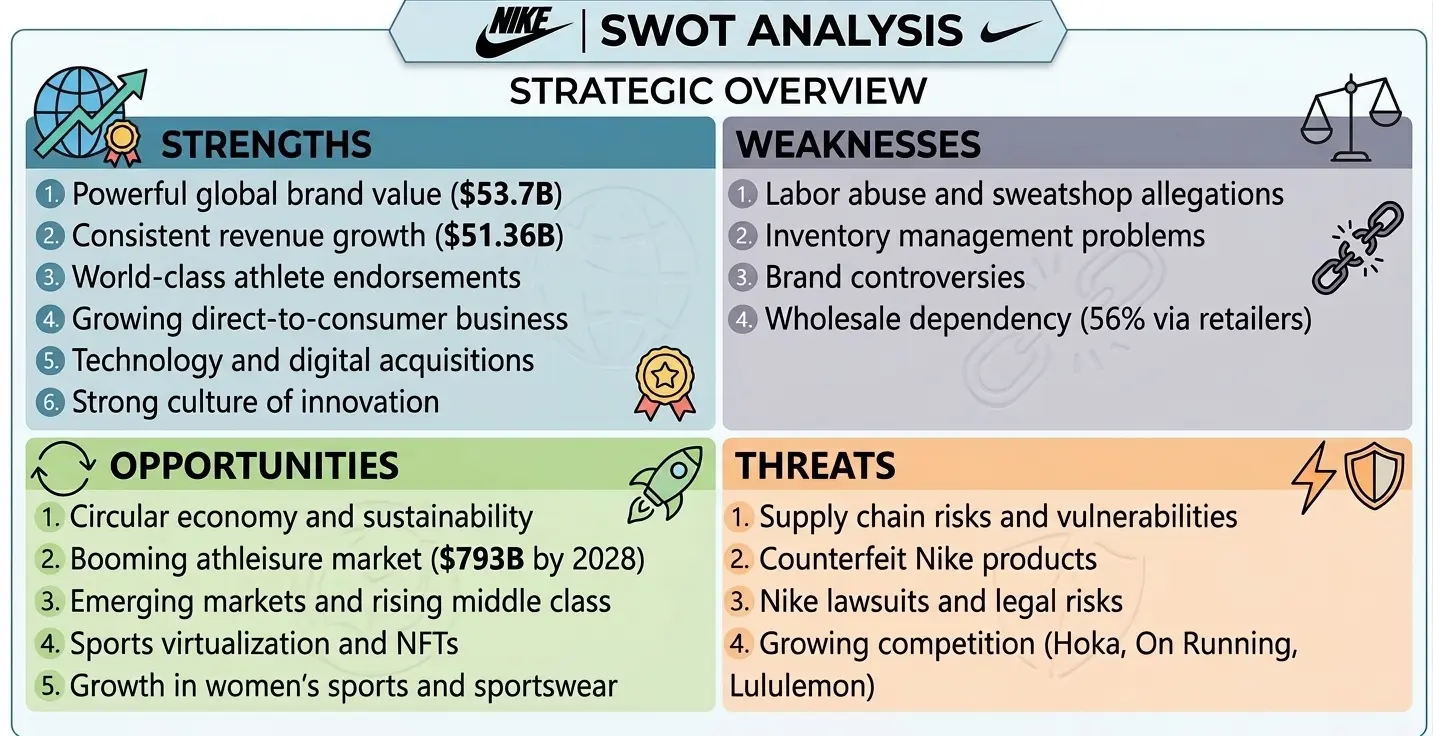
SWOT Analysis of Nike Company
Here is the detailed discussion of Nike SWOT Analysis.
What are the Key Strengths of Nike
1. One of the Most Valuable Brands in the World
Nike is not just a sportswear company. It is one of the most recognized brands on the planet. According to Interbrand, Nike’s brand value sits at $53.7 billion. Kantar puts it even higher at $109 billion. Either way, the numbers are staggering.
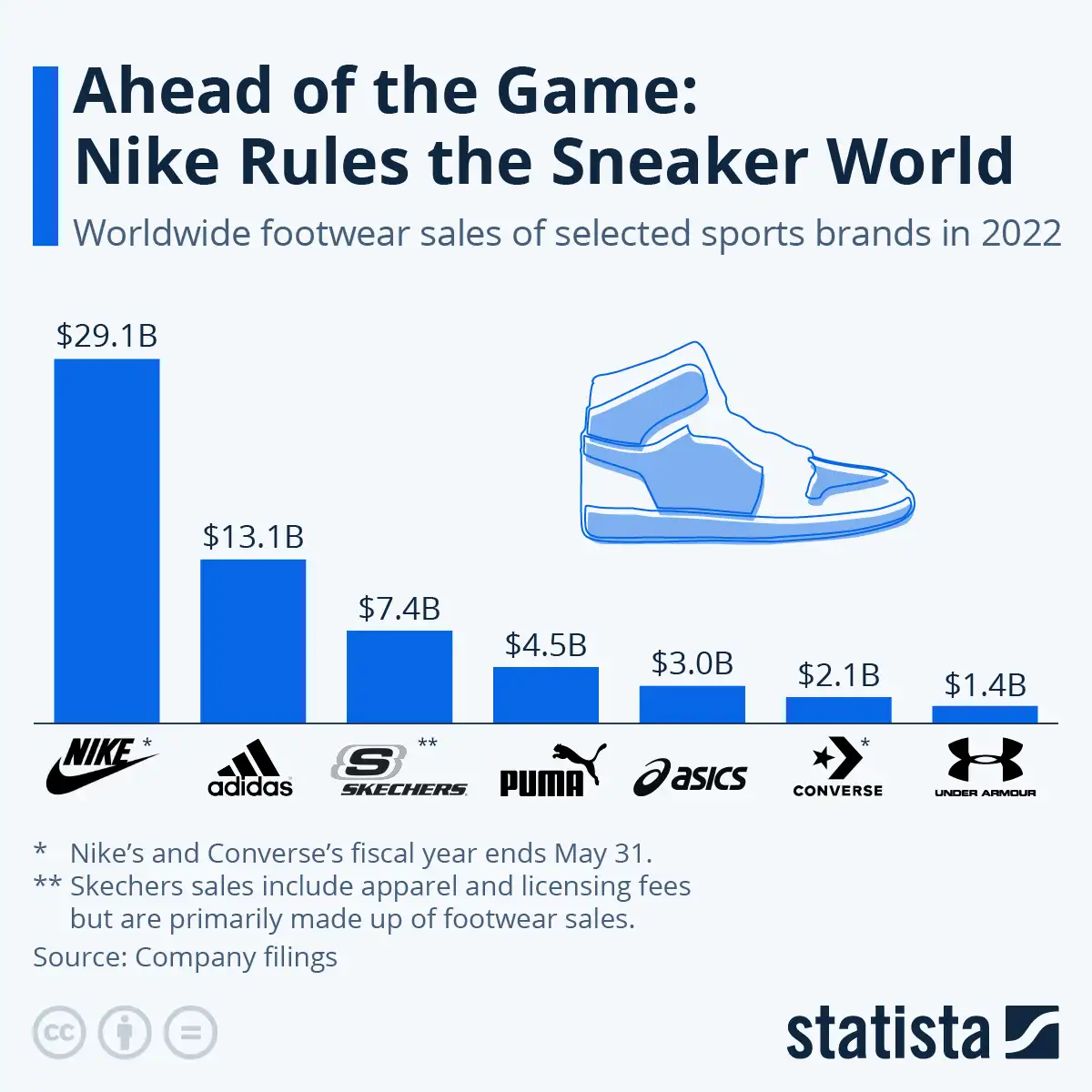
What makes this more impressive is the gap between Nike and its closest rival in terms of financial performance. Adidas, the second biggest name in sportswear, has a brand value of around $30 billion. Nike is nearly five times ahead.
That kind of brand power does not happen by accident. It is built over decades through smart marketing, emotional storytelling, and products that actually perform. The swoosh alone carries more weight than most companies’ entire marketing budgets.
2. Strong and Consistent Revenue Growth
Nike generates revenue from three main areas: footwear, apparel, and sports equipment. Footwear is the biggest piece of the pie. Around 60% of Nike’s sales come from international markets. That kind of geographic balance protects the business when one region slows down.
Even during the pandemic, Nike found a way to push forward. When other brands pulled back on digital marketing strategies, Nike leaned in harder on its digital platforms. The result? Nike’s digital sales jumped 82% in the first quarter of fiscal year 2020 alone.
3. Athlete Endorsements and Marketing Power
Nike has over 650 sponsorships across more than 140 leagues and sports associations worldwide, contributing to its impressive annual revenue. No other brand comes close to that level of reach. Michael Jordan was one of the earliest and biggest bets. Nike signed him in 1984 for $500,000 a year.
They expected Air Jordan 1 to bring in $3 million over four years. Instead, it pulled in $126 million in the very first year.
Today, the roster includes Cristiano Ronaldo, LeBron James, Tiger Woods, Rafael Nadal, and dozens more. Some of these deals are worth over a billion dollars across a lifetime.
Nike spent $3.85 billion on advertising and promotions in 2022 alone. Around 95% of online sports shoppers in the US recognized the Nike brand in surveys that same year.
4. Growing Direct-to-Consumer Business
For a long time, Nike relied heavily on wholesale partners like Foot Locker and department stores to sell its products through its retail stores. That started changing in 2017.
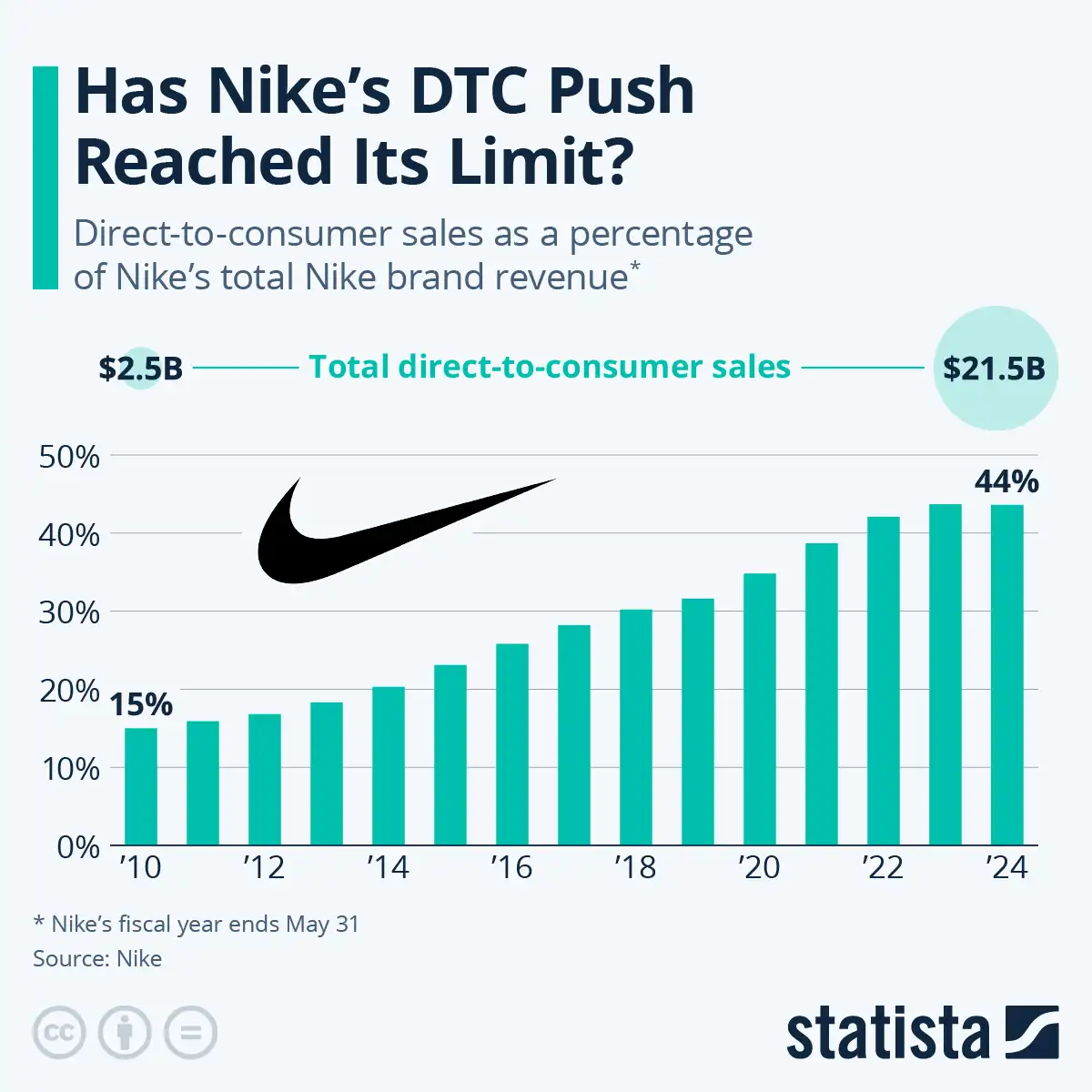
Nike launched what it called the Consumer Direct Offense strategy. The goal was to reduce dependence on third-party retailers and sell more directly to customers through its own stores and website.
In 2019, Nike ended its partnership with Amazon. In 2020 and 2021, it cut ties with dozens of wholesale accounts. Selling direct-to-consumer means better margins. It also means Nike controls the full customer experience from start to finish.
More importantly, it gives Nike access to customer data. That data helps the brand understand what people want, when they want it, and how to reach them more effectively. Nike’s D2C sales have been growing fast.
5. Technology Investments and Digital Acquisitions
Nike does not just make shoes. It has been buying tech companies too. Between 2018 and 2021, Nike made four major acquisitions. Zodiac handled customer analytics.
Celect worked on demand forecasting. Invertex brought in 3D body scanning. Datalogue connected data from every corner of the business.
The brand also shifted toward headless e-commerce. Pages load faster. The mobile experience feels smoother and Nike can test new ideas without breaking everything else. Then there are the apps.
Nike Training Club and SNKRS collect data, build habits, and keep users coming back. That is a sales channel most competitors do not have.
6. A Strong Culture of Innovation
Nike has always been obsessed with making better products. That obsession is now housed in the LeBron James Innovation Center at Nike’s headquarters in Oregon.
The facility covers 700,000 square feet and brings together over 700 people from innovation teams across the company. Inside is the Nike Sport Research Lab. It has 400 motion capture cameras, 97 force plates, and over 825 pieces of testing equipment.
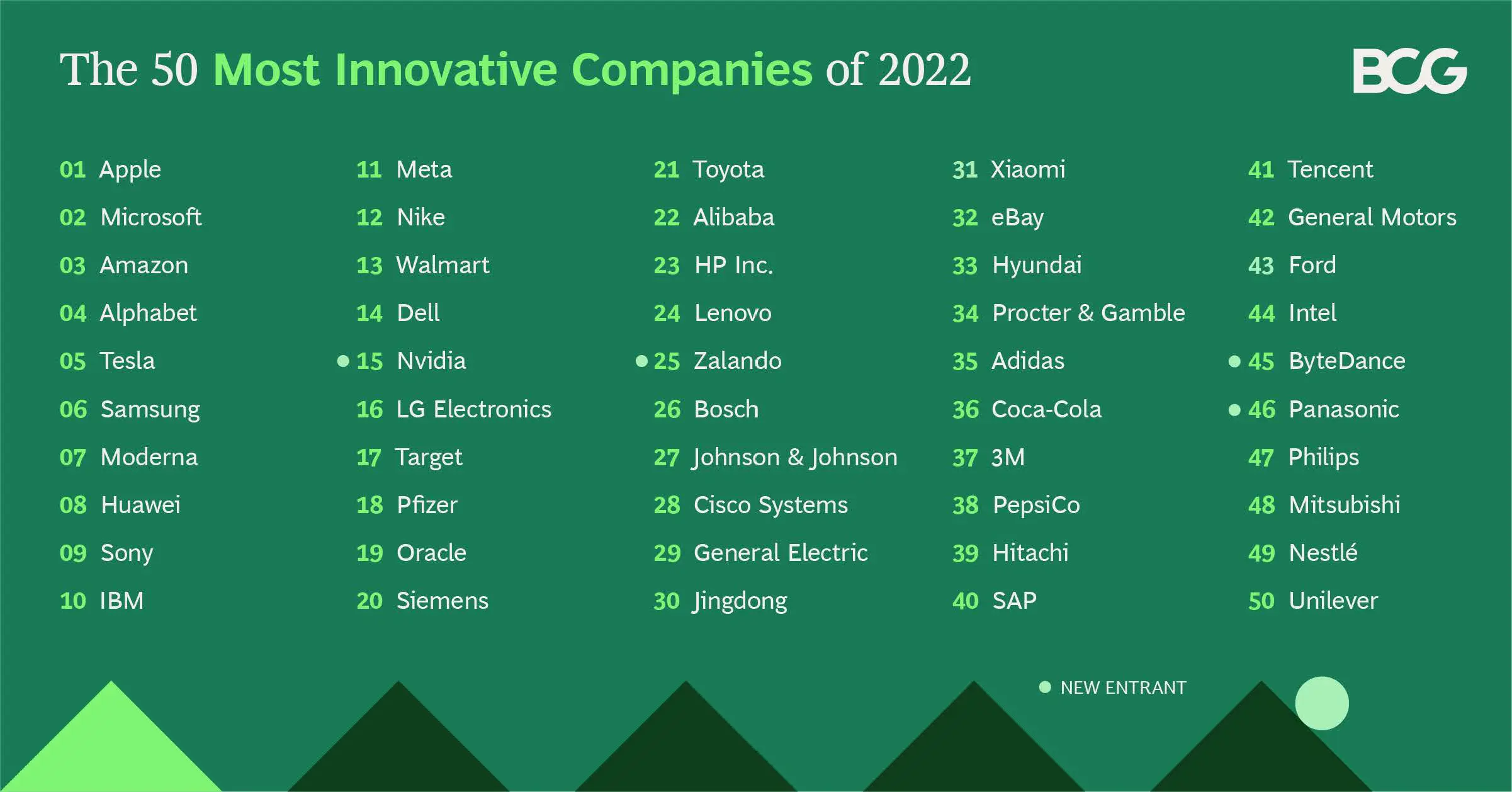
Nike also ranked 12th on BCG’s list of the 50 most innovative companies in 2022. Products like Flyknit technology, Air Max cushioning, and the Vaporfly running shoe all came from this culture of pushing boundaries.
7. Low Manufacturing Cost
Nike works with manufacturing partners across Asia to keep costs low and stay flexible. In fiscal 2025, Vietnam accounted for 51% of all footwear production. Indonesia contributed 28% and China 17%. The remaining share came from Brazil, India, Italy and a few other markets around the world.
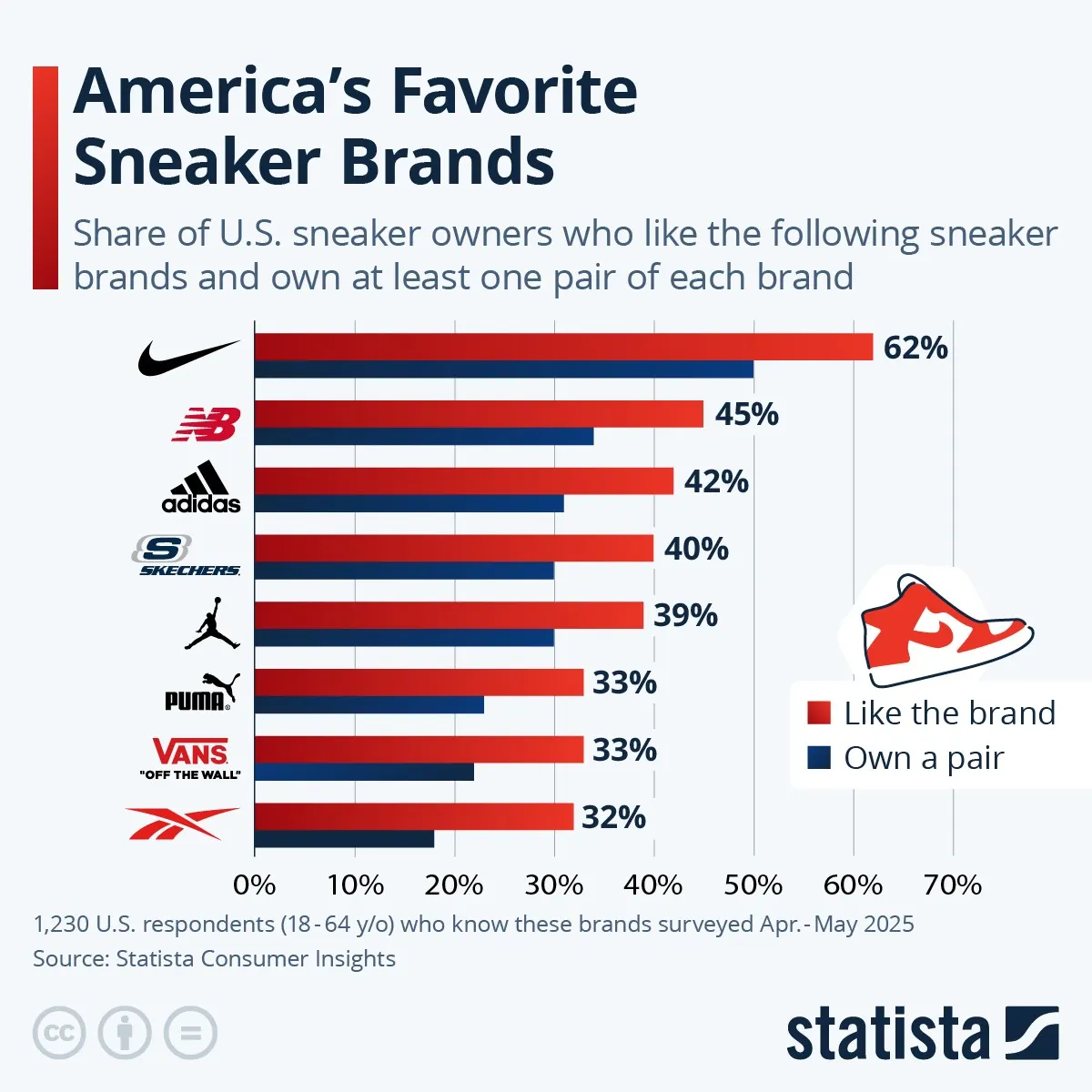
8. America’s Most Favorite Sneaker Brand
According to Statista’s Sneaker Brands Survey 2025, Nike remains America’s favorite sneaker brand and continues to dominate the athletic footwear market.
What are Nike’s Main Weaknesses
1. Labor Abuse and Sweatshop Allegations
Nike’s biggest reputation problem is not competition. It is labor and labor practices. Since the 1990s, Nike has faced repeated accusations of using sweatshop labor in Asia. Workers in Cambodia and Pakistan were reportedly stitching Nike products up to 16 hours a day, seven days a week. The brand took serious heat for it. Sales dropped. Public trust took a hit.
In 2020, a report from the Australian Strategic Policy Institute found that Uyghur women were being forced to produce Nike shoes in a factory in China. A separate case accused Nike of allowing garment workers in its supply chain to face unpaid wages, arbitrary pay cuts, and gender discrimination during COVID, highlighting serious issues within the company’s supply chain.
Nike’s own audits failed to catch these violations. That raises real questions about how seriously the brand monitors its suppliers.
2. Inventory Management Problems
In late 2022, Nike found itself sitting on too much stock. Retailers, including its retail partners, had ordered early. Deliveries arrived faster than expected. The result was a massive inventory pile-up.
In 2023, the company publicly admitted it would pursue aggressive markdowns to fix the problem. That directly hurt profit margins.
For a brand at this scale, poor inventory forecasting is a costly mistake. Investors noticed. Excess inventory is often seen as a sign of deeper management issues, not just bad timing.
3. Brand Controversies That Damaged Public Image
Nike has pulled itself into several controversies over the years. Some were unavoidable. Others were self-inflicted. In 2017, the Paradise Papers revealed that Nike used offshore companies to reduce its tax burden. In 2018, under the leadership of CEO John Donahoe, Nike signed Colin Kaepernick for a long-term campaign. The campaign split public opinion sharply.
In 2019, US Vice President Mike Pence accused Nike of staying silent on Hong Kong protests to protect its business in China. A year later, Nike’s Vaporfly running shoe faced accusations of giving athletes an unfair advantage.
Each controversy chipped away at Nike’s brand image in a different audience segment.
4. Wholesale Dependency
Nike still generates a large chunk of revenue through wholesale partners; around 56% of Nike products move through wholesalers and retailers.
That means retailers control pricing, shelf placement, and the customer experience. Nike has been slowly cutting these ties. But the dependency has not disappeared completely. It limits Nike’s control over its retail profit margins.
5. Lack of Diversification
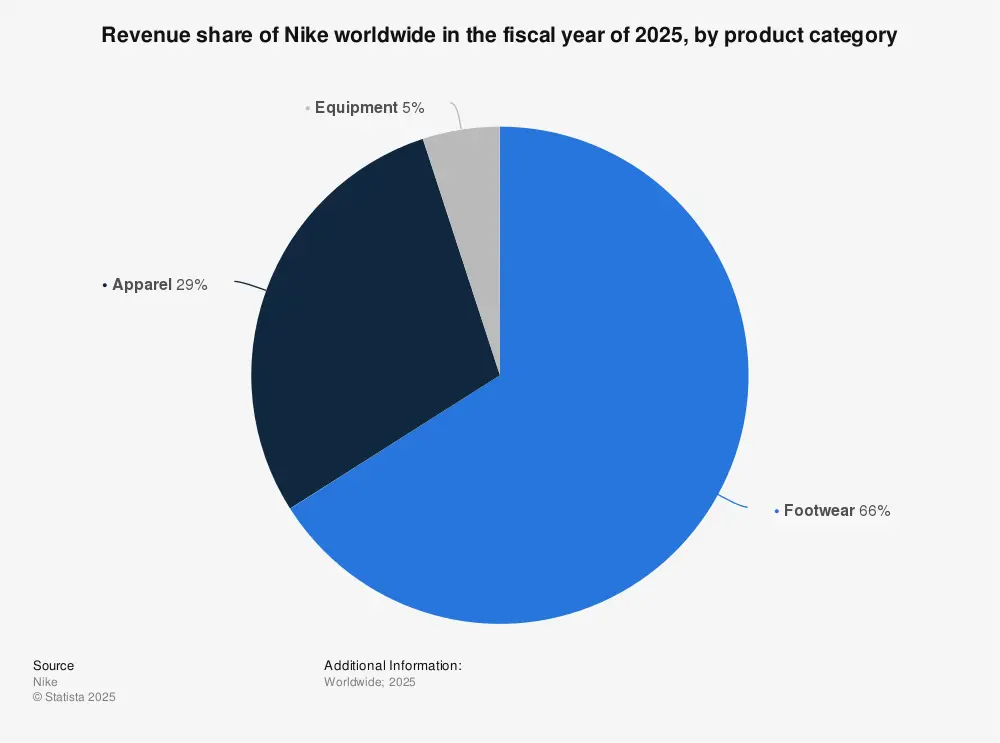
Nike makes most of its money from one thing. Shoes. Footwear accounts for 66% of total revenue in fiscal 2025. Apparel adds 29% and Equipment just 5%. The brand’s heavy dependence on a single category is a real weakness.
What Opportunities Does Nike Have
1. Circular Economy and Sustainability
Consumers care more about the environment than ever before, reflecting the increasing consumer demand for sustainability. The World Economic Forum estimates the shift to a circular economy could unlock $4.5 trillion in global growth by 2030.
Nike has been working on this for over 30 years. The company developed Nike Flyleather, a material made from recycled leather scraps. It is 40% lighter than regular leather and more durable.
Nike also published its own circularity design guidelines based on ten key principles. Brands that get sustainability right earn stronger customer loyalty and cut material costs over time.
2. The Athleisure Market is Booming
The global athleisure market was worth $411 billion in 2021. It is expected to reach $793 billion by 2028. That is nearly double in under a decade.
Gen Z is driving a big part of this growth. According to CivicScience data, Nike is their number one athleisure brand of choice.
Emerging markets are adding fuel too. India’s sports apparel and footwear market alone is projected to hit $40 billion by 2027. Nike already has the brand recognition and the distribution network to capture a large share of this growth.
3. Emerging Markets and the Rising Middle Class
Most of Nike’s future growth will not come from the US. Analysts project that over 70% of Nike’s growth in the next five years will come from outside North America.
Markets like China, India, parts of Africa, and Latin America are seeing a fast-growing middle class with more spending power. These consumers want global brands. They want quality. And they are willing to pay for it.
Nike already has a presence in these regions. More stores, better localized marketing, and stronger digital channels in these markets could drive significant long-term revenue.
4. Sports Virtualization and NFTs
The way people connect with sports on social media is changing. Fans no longer just watch games. They collect digital assets, buy fan tokens, and engage with their favorite athletes online in new ways.
Nike moved early on this. In 2021, it acquired RTFKT, a Web3 studio known for digital sneakers. In 2022, it launched. Swoosh is its own Web3 platform built on the Polygon network.
In 2023, Nike dropped its first NFT sneaker collection called Our Force 1. It was based on the iconic Air Force 1 product design. Brands that build early loyalty in digital communities will have a real advantage as the market matures.
5. Growth in Women’s Sports and Women’s Sportswear
Women’s sports had a record-breaking year in 2022. Attendance was up. Viewership was up. Investment was up. That momentum is creating a bigger market for women’s sportswear and merchandise.
Nike has been pushing hard in this space. Apps like Nike Training Club brought in millions of new female members. The brand redesigned how it markets, communicates, and creates products specifically for women.
The stated goal is to double women’s sales by 2025. Given the growth in women’s athletics globally, this is one of the most direct and immediate opportunities on the table.
What Threats Does Nike Face?
1. Nike Supply Chain Risks and Vulnerabilities
Nike sources products from 120 contract factories across 11 countries. Just four footwear manufacturers account for nearly 58% of all Nike brand footwear production.
If any one of them misses a delivery or fails a quality check, the impact hits hard and fast. Geography adds more risk. Freight costs can spike. Shipping delays happen. Natural disasters shut down ports.
The swoosh company also operates across many currencies. A sudden exchange rate shift in Asia or Latin America can quietly eat into margins. Supply chain disruptions during COVID proved exactly how exposed large global brands can be.
2. Counterfeit Nike Products
Nike is one of the most counterfeited brands in the world, reflecting its strong brand equity. The OECD confirmed it. Global trade in counterfeit products was worth $464 billion in 2019. Footwear and apparel were among the most faked categories.
Fakes hurt the brand in two ways. First, Nike loses direct revenue. Second, buyers who purchase low quality counterfeits often blame the brand itself when the product falls apart.
Online marketplaces have made this worse. Fake Nike shoes are easier to find and harder to report than ever before.
3. Nike Lawsuits and Legal Risks
Nike has paid $17.7 million in penalties since 2000, and the legal battles keep coming.
In 2023, a gender discrimination lawsuit against Nike produced over 5,000 pages of records. The documents alleged sexism, corporate bullying, and fear of retaliation inside the company.
Patent wars are a separate issue. Nike sued Lululemon in 2023 over alleged Flyknit technology infringement. Around the same time, Adidas sued Nike, claiming its Run Club and Training Club apps violated patented technology.
Winning or losing these cases costs money either way. Legal fees add up. And every lawsuit that makes headlines creates a PR headache alongside the legal one.
4. Nike Competition is Getting Stronger
Nike leads the global sportswear and athletic apparel market. But the gap is narrowing.
Hoka and On Running have built loyal followings among serious runners. Both are taking market share in the performance footwear segment, where Nike has always been dominant.
Lululemon targets high-income, fitness-focused buyers and consistently pulls higher gross margins than Nike. Under Armour and Puma continue to invest heavily in athlete sponsorships and product innovation.
The brands eating into Nike’s growth right now are the ones moving fast in niche segments where Nike has been slow to respond.
Conclusion
Nike is still the biggest name in sportswear, thanks in part to athletes like Serena Williams. The brand value, the athletes, and the global reach are all there. But this SWOT analysis shows the brand isn’t perfect. Labor issues, inventory mistakes, and rising competition are real problems Nike can’t ignore.
The opportunity side looks strong, though. Athleisure is growing fast, and emerging markets are opening up. And AI is already changing how Nike operates.
The swoosh isn’t going anywhere. But staying on top takes more than a famous logo.
Frequently Asked Questions
A SWOT analysis of Nike is a strategic tool that examines the company from four perspectives. Two are internal: Nike’s strengths are what the company does well, and Nike’s weaknesses are areas where it falls short. Two are external: opportunities are trends Nike can capitalize on, and threats are external forces that could hurt the business.
Nike’s strengths start with its brand. With a brand value of over $53 billion, it is the most valuable apparel brand in the world. Beyond that, Nike has consistent revenue growth, a world-class athlete endorsement portfolio, and a fast-growing direct-to-consumer strategy. Its culture of innovation is another major strength.
Nike’s weaknesses include long-standing labor abuse allegations in overseas factories, inventory management failures, over-dependence on footwear revenue, involvement in public controversies, and a long-term debt of nearly $8.9 billion. These are internal factors that Nike needs to address to strengthen its overall strategic position.
The global athleisure market is projected to reach $793 billion by 2028. Emerging markets in Asia, Africa, and Latin America are growing fast. Women’s sports are attracting record investment and viewership. Sustainability and the circular economy represent a $4.5 trillion opportunity by 2030. Each of these trends plays to Nike’s existing strengths.
Nike’s biggest threats include intense competition from brands like Adidas, Lululemon, On Running, and Hoka. Counterfeit Nike products continue to flood global markets. Supply chain concentration risk leaves Nike vulnerable to disruptions. Legal battles with Adidas and Lululemon over patent infringement drain both money and attention.
Nike’s main competitors include Adidas, Puma, Under Armour, New Balance, Lululemon, ASICS, Anta Sports, On Running, and Hoka. Nike holds around 39% of the global athletic footwear market. But these brands are investing heavily in innovation, marketing, and athlete sponsorships to close the gap.
Nike is using AI in practical, measurable ways, including forming strategic partnerships that enhance its technology. Its Nike Fit tool uses computer vision to recommend the right shoe size for each customer. The Celect acquisition brought in AI-powered demand forecasting that helps reduce inventory problems. Personalized product recommendations across Nike’s apps and website also run on AI.
Yes. Nike is one of the best companies to study for strategic business analysis. It has decades of history, a powerful global brand, and operations across 190+ countries. Students, marketers, and business professionals can learn a lot from studying Nike’s brand strategy, digital transformation, and competitive positioning.

 AND external factors (Opportunities & Threats) that affects its performance)