


An advertising campaign is a planned series of ads that share one message and one goal, run across one or more media over a set period of time. The best advertising examples turn a simple idea into something people remember, talk about, and act on.
Great ads do more than tell customers a brand exists. They set it apart from competitors, change how people feel about it, and drive sales for years. Many of the campaigns below are still studied in marketing classes decades after they first ran.
Below, you will find a quick comparison table, 15 of the most effective ad campaigns with the lesson behind each one, and a step-by-step guide to applying those lessons to your
Key Takeaways
- An ad campaign is a coordinated series of ads with one message, one goal, and a set time frame.
- The most successful campaigns rely on one clear idea, such as Nike’s “Just Do It” or Volkswagen’s “Think Small.”
- Low-budget campaigns can win big: Dollar Shave Club’s $4,500 launch video signed up about 12,000 customers in 48 hours.
- Real-time and social campaigns, like Oreo’s 2013 Super Bowl tweet, prove that speed can beat spending.
- Every great campaign starts with a clear audience, a single message, and the right channel.
What Makes an Advertising Campaign Successful?
Most successful campaigns share four traits. They target a clear audience, focus on one simple message, create an emotional reaction, and appear in the channel where that audience pays attention.
They also start with clear advertising objectives, such as building awareness, changing perceptions, or driving sales. Without a goal, even a clever ad is hard to measure.
Advertising Examples at a Glance
| # | Brand | Campaign | Year | Main Channel | Key Lesson |
|---|---|---|---|---|---|
| 1 | Apple | iPod Silhouettes | 2003 | TV, print, outdoor | Make the product the hero |
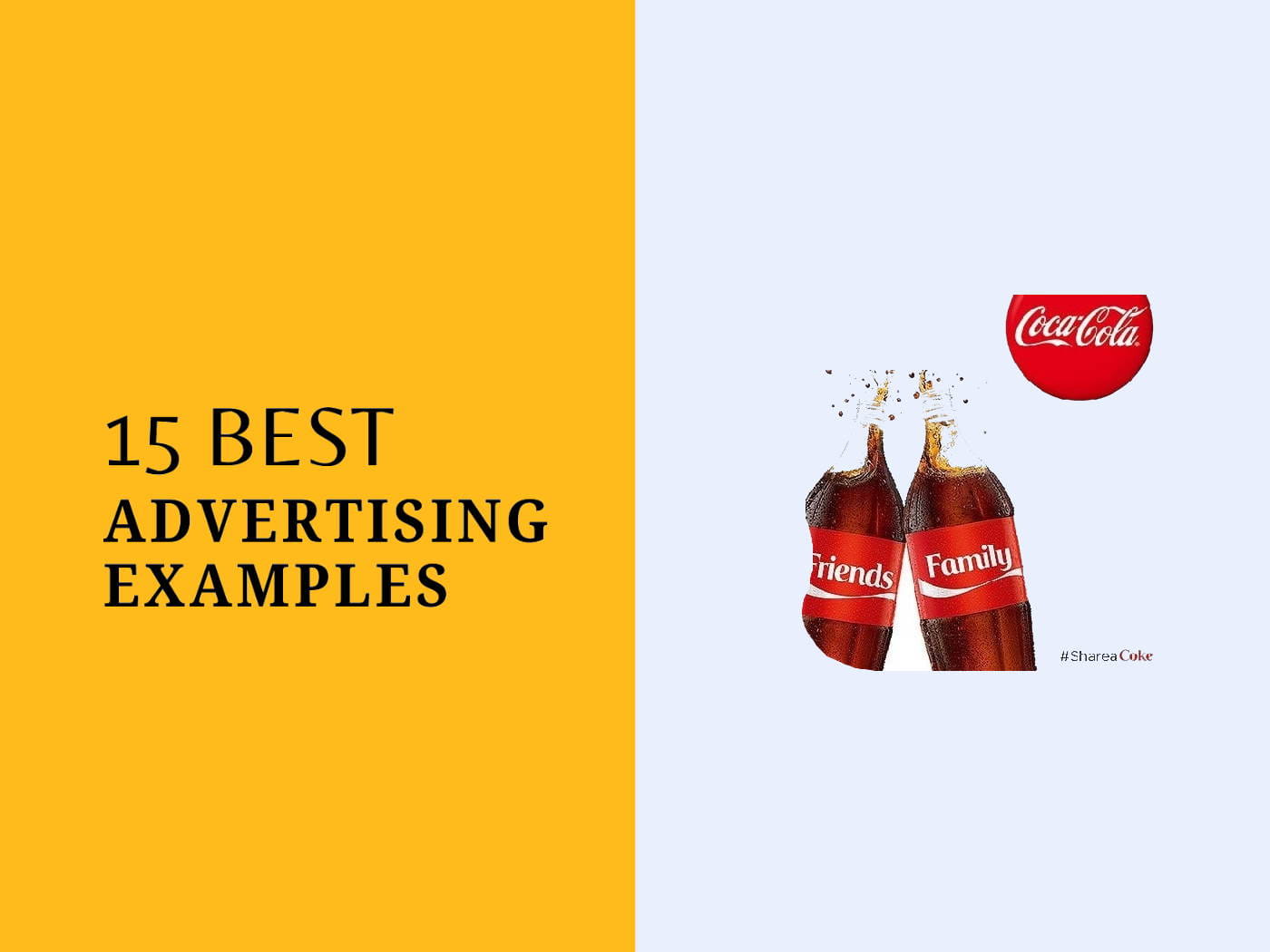
| 2 | Coca-Cola | Share a Coke | 2011 (US: 2014) | Packaging | Personalization drives sharing |
| 3 | McDonald’s | Open at Night | Not dated | Billboard | Simple visuals beat long copy |
| 4 | Heinz | Pour Perfectly | Not dated | Show the product benefit visually | |
| 5 | Nike | Just Do It | 1988 | TV, print | Sell an attitude, not a product |
| 6 | Audible | Travel in Your Mind | 2020 | Video, audio | Adapt to what customers are living through |
| 7 | Old Spice | The Man Your Man Could Smell Like | 2010 | TV, YouTube | Humor can reposition an old brand |
| 8 | IKEA | Pee on This | 2018 | Interactive ads get attention | |
| 9 | Oreo | You Can Still Dunk in the Dark | 2013 | Speed matters in social media | |
| 10 | Dunkin’ | America Runs on Dunkin’ | 2006 | TV, radio | Own an everyday moment |
| 11 | Dollar Shave Club | Launch video | 2012 | YouTube | A small budget can still go viral |
| 12 | Airbnb | Live There | 2016 | Video, digital | Sell the experience, not the room |
| 13 | Nivea | Night Time Cream | Not dated | Packaging, print | Design can tell the story |
| 14 | Always | #LikeAGirl | 2014 | Online video, TV | Purpose-driven ads build loyalty |
| 15 | Volkswagen | Think Small | 1959 | Turn a weakness into a strength | |
| 16 | Nike | So Win | 2025 | TV (Super Bowl), social | Back a growing audience with a bold message |
| 17 | Duolingo | The Death of Duo | 2025 | Social media, app | Turn your mascot into a story |
| 18 | Apple | Shot on iPhone | 2015 to today | Billboards, print, digital | Let customers prove the product |
What Are the 18 Best Advertising Examples?
1. Apple: iPod Silhouettes (2003)
Apple and agency TBWA\Chiat\Day showed black silhouettes of people dancing against bright colored backgrounds, with only the white iPod and earbuds visible. The ads had almost no text.
Why it worked: The white earbuds became a status symbol. Every iPod user on the street turned into a walking advertisement.
2. Coca-Cola: Share a Coke (2011)
Coca-Cola replaced its logo with popular first names on bottles and cans. The campaign started in Australia in 2011 and launched in the US in 2014.
Why it worked: People hunted for their own names and friends’ names, then shared photos online. Personalization turned a mass product into a personal one.
3. McDonald’s: Open at Night
This billboard showed a dark background with the McDonald’s logo shaped by light, telling viewers the restaurant was open late. It used almost no words.
Why it worked: It delivered one message in a single glance, which is exactly what out-of-home advertising needs.
4. Heinz: Pour Perfectly
Heinz print ads showed tomato slices arranged in the shape of a ketchup bottle. The visual linked the product directly to its main ingredient.
Why it worked: It communicated freshness and quality without a single claim. Strong print advertising often says more with images than words.
5. Nike: Just Do It (1988)
Dan Wieden of agency Wieden+Kennedy wrote “Just Do It” in 1988. The slogan spoke to anyone pushing themselves, not only professional athletes. Between 1988 and 1998, Nike’s worldwide sales grew from $877 million to $9.2 billion, and its share of the North American sport-shoe market rose from 18% to 43%.
Why it worked: It sold determination, not shoes. The slogan still anchors Nike’s marketing today. See how Nike chooses its audience in our Nike target market breakdown.
6. Audible: Travel in Your Mind (2020)
During the 2020 pandemic, when people could not travel, Audible invited listeners to “travel” through audiobooks set in faraway places.
Why it worked: It matched the product to what customers were feeling at that exact moment, turning a limitation into a reason to buy.
7. Old Spice: The Man Your Man Could Smell Like (2010)
Wieden+Kennedy cast actor Isaiah Mustafa in a fast, funny commercial that ran during the 2010 Super Bowl period. Old Spice followed up with dozens of quick YouTube videos replying to fans by name.
Why it worked: Humor turned a brand seen as old-fashioned into a pop-culture hit, and the personal replies kept the conversation going for days.
8. IKEA: Pee on This (2018)
Swedish agency Åkestam Holst created a magazine ad that worked like a pregnancy test. If a reader was pregnant, the ad revealed a discount on a crib.
Why it worked: It was so unusual that news sites around the world covered it, earning far more attention than the ad space cost.
9. Oreo: You Can Still Dunk in the Dark (2013)
When the lights went out during Super Bowl XLVII in 2013, Oreo and its agency 360i tweeted a simple image within minutes. It was retweeted more than 15,000 times.
Why it worked: Speed. Oreo won the night’s attention without paying for a TV ad, proving the power of real-time social media.
10. Dunkin’: America Runs on Dunkin’ (2006)
Agency Hill Holliday positioned Dunkin’ as fuel for busy, working Americans rather than a treat. The line is still in use years later.
Why it worked: It tied the brand to an everyday moment, the morning rush, so customers think of Dunkin’ every working day.
11. Dollar Shave Club: Launch Video (2012)
Founder Michael Dubin starred in a funny YouTube video that cost about $4,500. It debuted in March 2012, and about 12,000 people signed up in the first 48 hours. Unilever bought the company in 2016 for about $1 billion.
Why it worked: It proved that a strong idea and a clear personality can beat a big budget. Learn more in our guide to viral marketing.
12. Airbnb: Live There (2016)
Airbnb’s “Live There” campaign told travelers not to just visit a city but to live like a local, staying in real homes and neighborhoods.
Why it worked: It sold an experience that hotels could not offer, giving Airbnb a clear point of difference.
13. Nivea: Night Time Cream
Nivea used packaging design, with a crescent moon on the lid, to show that the cream was made for night use.
Why it worked: The product itself became the ad. Clever packaging can communicate a benefit before a customer reads the label.
14. Always: #LikeAGirl (2014)
Always and agency Leo Burnett asked people to show what doing something “like a girl” meant, then challenged the insult. A version aired during the 2015 Super Bowl.
Why it worked: It connected the brand to a cause its audience cared about, building loyalty that goes beyond the product.
15. Volkswagen: Think Small (1959)
At a time when Americans loved big cars, agency DDB promoted the small Volkswagen Beetle with a tiny car image and lots of empty space. Advertising Age later named it the best ad campaign of the 20th century.
Why it worked: It turned the car’s biggest weakness, its size, into its main selling point, and marketers still study it today.
16. Nike: So Win (2025)
For Super Bowl LIX in February 2025, Nike ran its first Super Bowl ad in more than 25 years. Created with agency Wieden+Kennedy and narrated by rapper Doechii, the spot showed female athletes such as Caitlin Clark, Sha’Carri Richardson, and Jordan Chiles pushing back against the limits people place on them, ending with the line “So win.”
Why it worked: It was the most-viewed ad of the game and drove the most social media engagement of any Super Bowl advertiser. Nike tied a clear message to a growing audience: women’s sports.
17. Duolingo: The Death of Duo (2025)
On February 11, 2025, Duolingo announced that its green owl mascot, Duo, had “died.” Fans were asked to earn points in the app to bring him back, and Duo returned on February 24 with the line “Legends never die.” The first post on X earned about 142 million impressions, and brands like Walmart and FedEx joined in the comments.
Why it worked: It turned a mascot into a story people wanted to follow, and it pushed users to open the app, which is the action Duolingo cares about most.
18. Apple: Shot on iPhone (2015 to Today)
Apple’s Shot on iPhone campaign uses real photos and videos taken by iPhone users on billboards, in print, and online. Created with TBWA\Media Arts Lab, it began in 2015, and in 2025 it won the Creative Effectiveness Grand Prix at the Cannes Lions festival, one of advertising’s top awards.
How Can You Create Your Own Successful Ad Campaign?
These campaigns came from big brands, but the same steps work for small businesses. For a fuller guide, see how to run a successful marketing campaign.
- Set one clear goal. Decide whether you want awareness, leads, or sales. One campaign, one goal.
- Define your audience. Know who you are talking to, like Dunkin’ did with busy commuters.
- Find one simple idea. “Just Do It” and “Think Small” each fit in three words or less.
- Choose the right channel. Oreo used Twitter, Volkswagen used print, and IKEA used a magazine page. Pick where your audience already spends time. Our guide to the types of advertising can help.
- Measure and adjust. Track clicks, calls, or sales, then improve the next round.
Bottom Line
In 14 years of blogging about marketing, the lesson I keep coming back to from these campaigns is that budget rarely decides the winner. Dollar Shave Club beat giant razor brands with a $4,500 video, and Oreo won the Super Bowl with a single tweet. What every one of these campaigns had was one clear idea aimed at one clear audience. Find yours before you spend a dollar on media.
Volkswagen’s “Think Small” is often called the most famous ad campaign of all time, after Advertising Age named it the best campaign of the 20th century. Nike’s “Just Do It,” Apple’s “1984” Super Bowl commercial, and Coca-Cola’s long-running brand ads are also regularly listed among the greatest. Each one built a lasting brand image, not just a short-term sales spike.

